
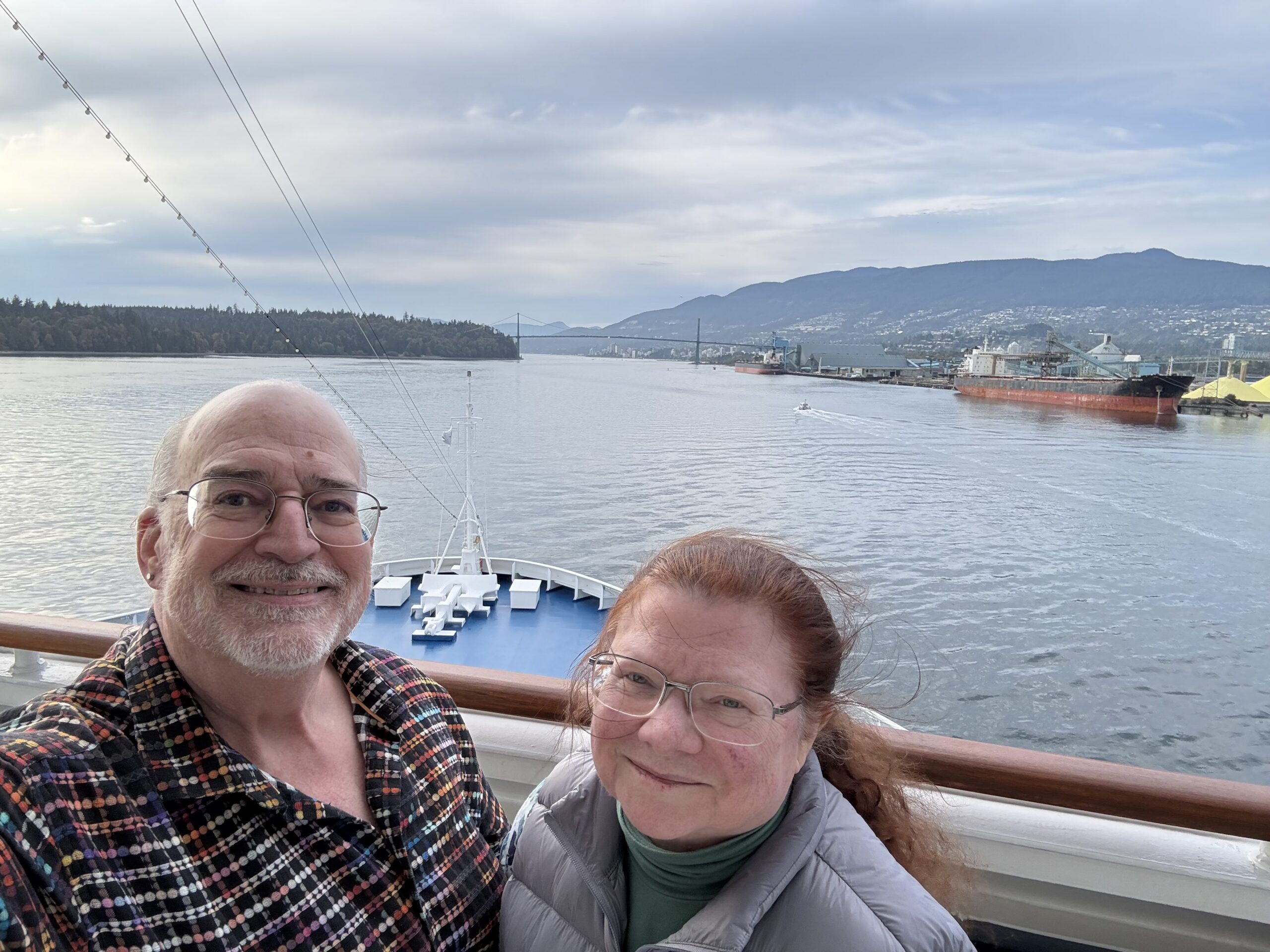
Saturday, September 12, 2026 — Depart Vancouver
Saturday, we made the short trip to the Canada Place cruise terminal from our apartment (15 minutes only because of the traffic in the last block), and we were on the cruise ship by lunchtime.
There was a big surprise waiting for Linda. I had told her about the original cabin I booked, a penthouse one at midships, but a couple of months ago I got an offer to bid on one of the vista suites that occupy the whole front half of the ship (with a wraparound balcony and 1,400 sq. ft. of space). Much to my surprise, my bid won.
Linda was rather surprised when a butler ushered us to the suite at the end of the hallway and opened the door onto our expansive living room, dining room, and work area. There’s also a large bedroom, a huge walk-in closet, a bathroom that, by itself, is the size of most of the cabins on the ship, and even a private exercise room off of the bedroom. The guest bath off the living room even has its own shower, so I guess the suite would be good for four people as well if someone wanted to sleep on the fold-out couch.
The balcony is enormous and stretches from the center line of the ship all the way around the side and back to a private outside hot tub (although that’s questionably located underneath the 360° observation camera because the bridge is directly above us).
This room is spectacular but there are a couple of downsides to being on the front of the ship. Of course there’s a little bit more motion than when you’re midship but that doesn’t bother us. The real snag is that because of the wind, when the ship is in motion, the balcony furniture on it is tied off because of the wind from the ship’s motion. So you can only relax on the balcony when you’re in port. (This isn’t really an issue on our Alaskan cruise because you’re not likely to want to spend a lot of time sitting on the balcony anyhow.) Additionally you can’t have the drapes open on any of the windows at night because the light leak interferes with navigation on the bridge.
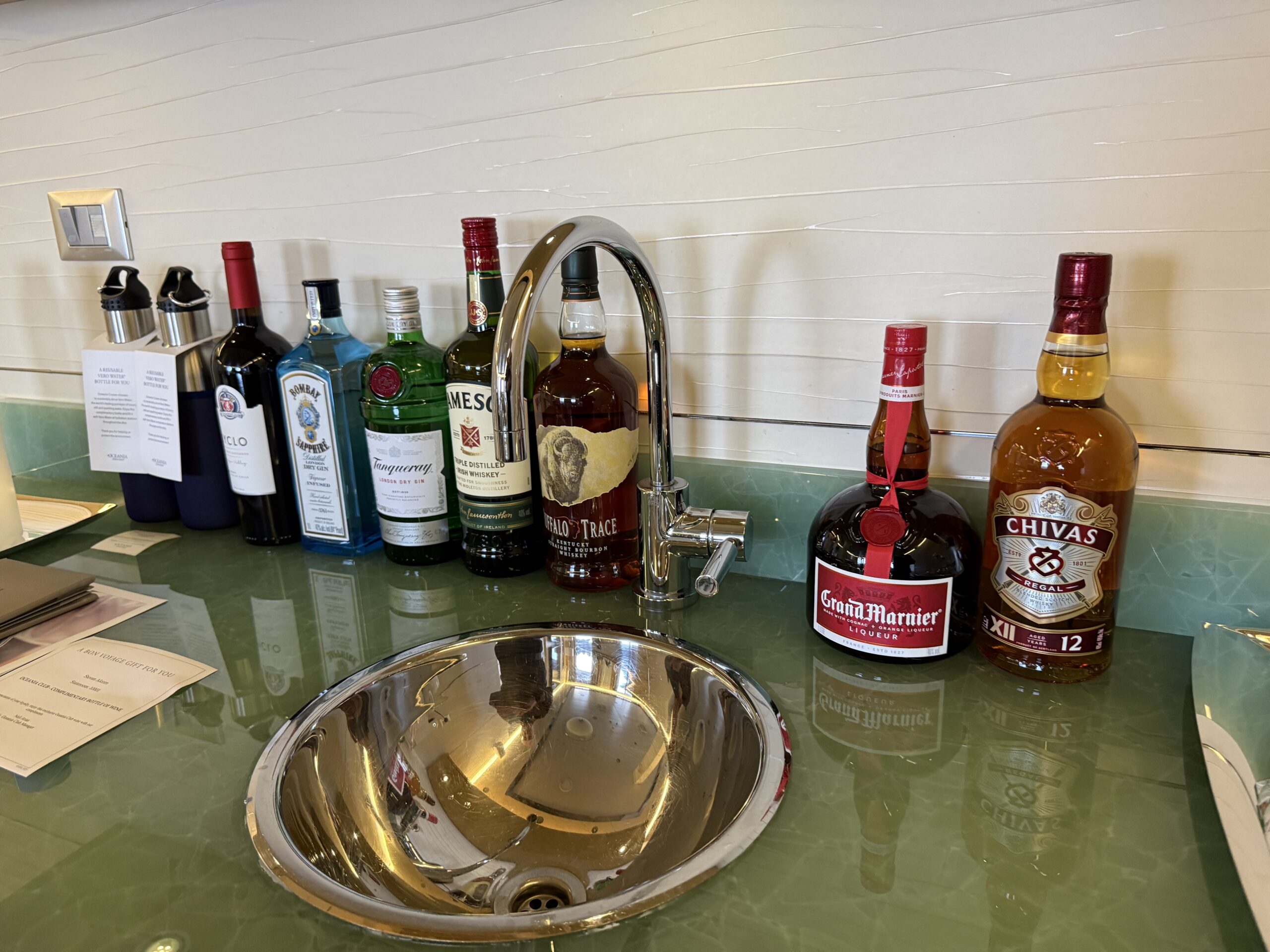
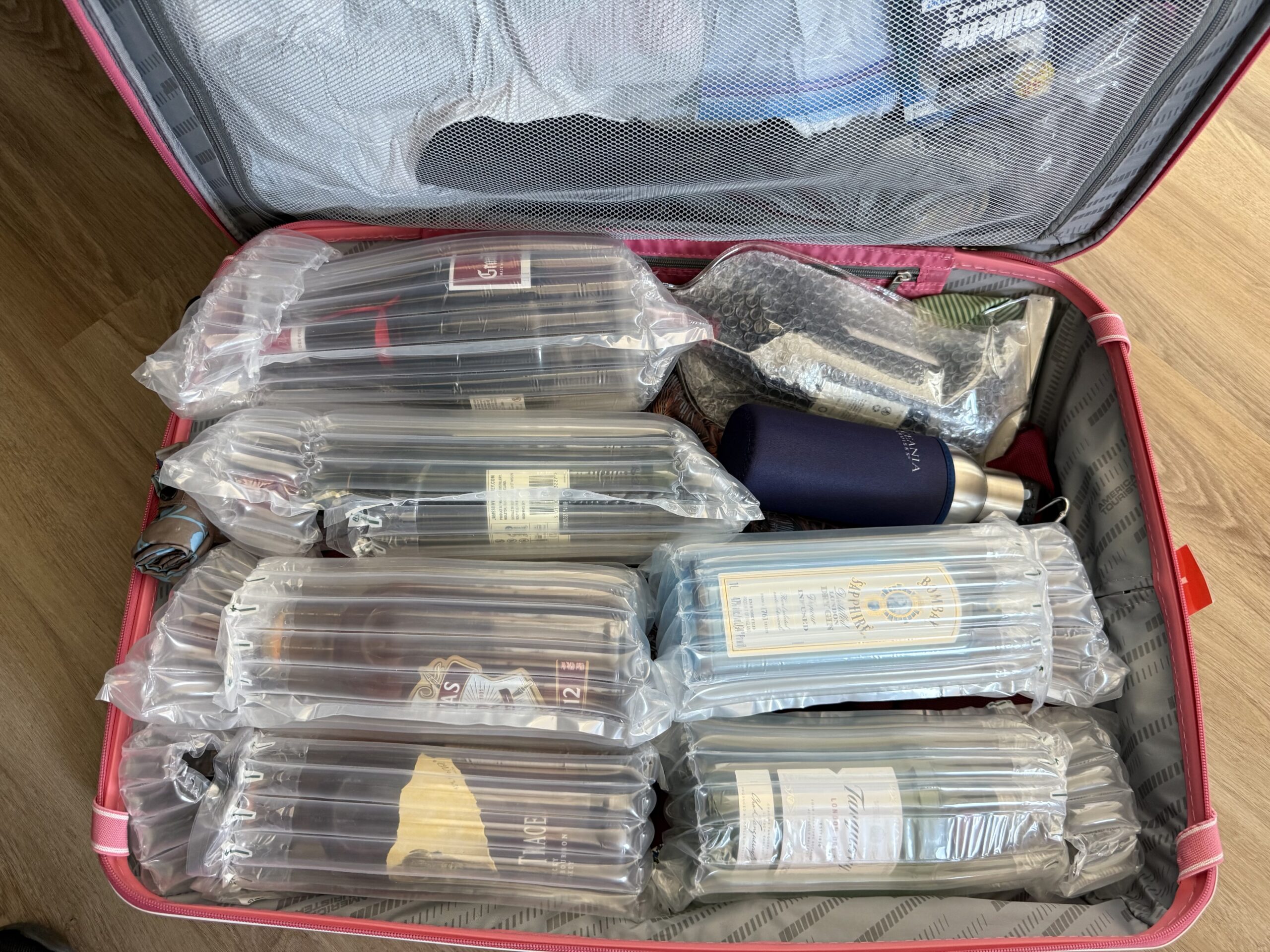
But the suite comes with many benefits, including your choice of six full bottles of liquor or wine from their premium list. We wasted no time in pillaging six of the best bottles of liquor that are hard to get or unavailable in Vancouver. I planned ahead and had bought inflated bottle carriers exactly for this in mind, so we won’t actually open them. We’ll just take them with us and hopefully won’t have to pick up our luggage!
The suite passengers also are offered a private lunch on boarding day, so we went to Toscana and had a lovely lunch, and then returned to enjoy our cabin before setting sail and enjoying passing under the Lions Gate Bridge with the amazing view from our balcony.
Then we spent some time listening to a good band up on Horizons and went to dinner in the main dining room. Oceania is our favorite cruise line because of the quality of the food, and this is one of just a few nights that we’ll eat in the main dining room (because we have reservations for all four specialty restaurants during our 1-week cruise)
Our first dinner there was good — I had a delightfully cooked piece of fish that was a great contrast to the horrible cuisine we had most recently on Holland America.
Sunday, September 13, 2026 — Cruising the Inside Passage
Sunday was a sea day, and we just relaxed and enjoyed the room. Our butler thinks we’re a little strange — we’re so happy just relaxing in this beautiful cabin, enjoying each other’s company, and doing our usual computer things, rather than running around going to bingo contests and trivia challenges.
That evening we had our first specialty restaurant dinner, at Toscana. The lobster fra diavolo was particularly excellent. Perhaps because everybody is on GLP-1 medications, I like that the cruise line has decided to make the portions smaller. The lobster fra diavolo, for example, was a nice portion of lobster served on its open shell and accompanied by a small serving of linguine — a big contrast to the mounded plates of Italian food that we’re used to seeing on other cruise lines.
One of the best things about cruising is that if you like fine wine, you’re not obligated to drink a whole bottle of it at one meal. I’m particularly fond of Amarone, and they had a nice one from Tomasi available in a magnum on the Toscana wine list. We ordered that and just had a glass each of it, and it now can follow us around from dining room to specialty restaurant. It’s always wherever we are, which means we can enjoy it throughout the rest of the cruise.
Monday, September 14, 2026 — Ketchikan
Weather: quite temperate.
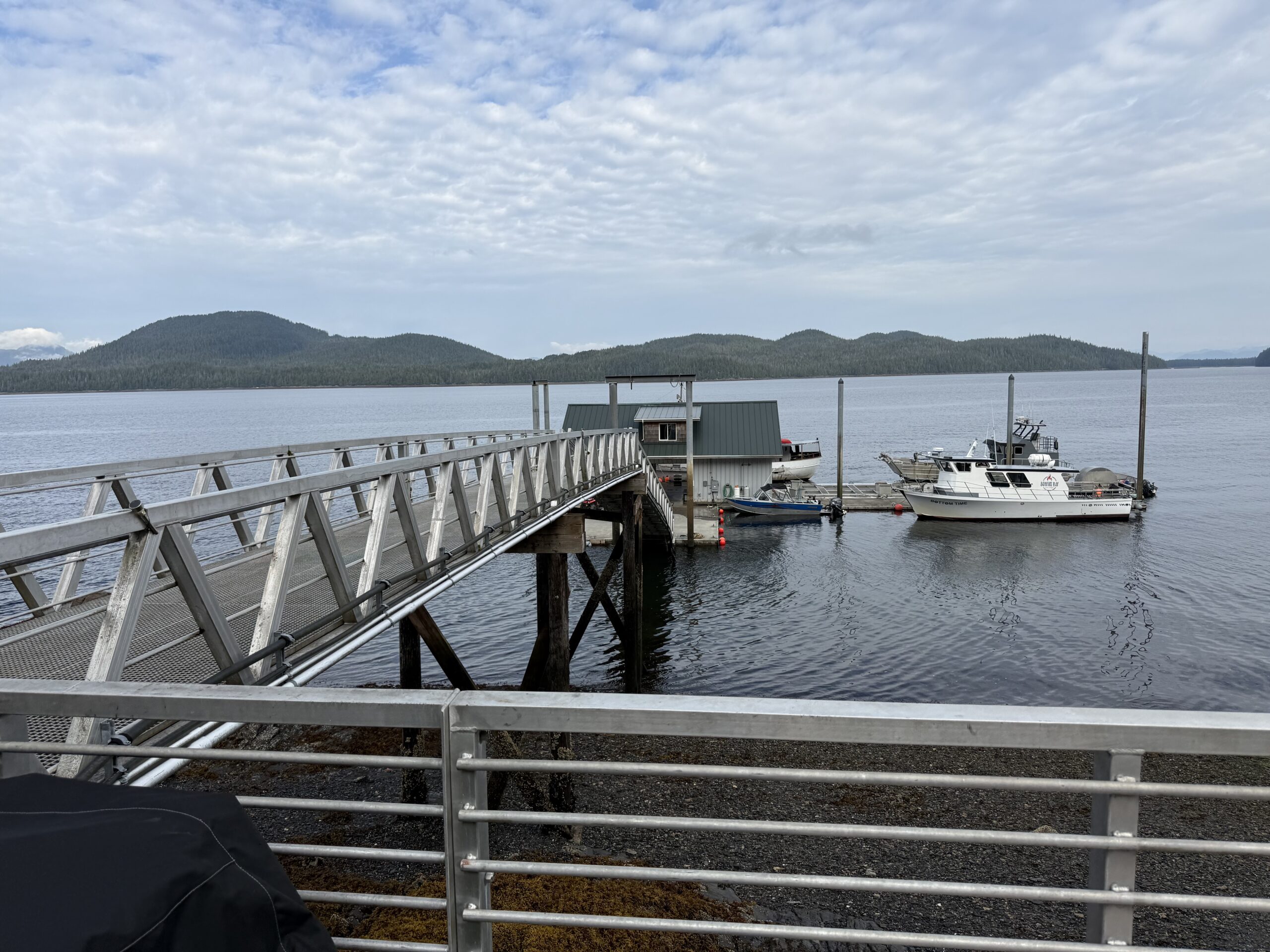
Alaska weather tends to be very overcast and rainy, so it’s always a treat when you get something different. In fact, the cloud cover cleared wonderfully for our day in Ketchikan on a very interesting shore excursion. We met in the ship’s culinary center, where the chef then guided us on a small-group tour. We took a van for 11 people a little ways up the coast. I always forget that Ketchikan is on an island surrounded by islands; the water is usually smooth and today was no exception. It was close to being like glass as we set out in a small boat headed for Hump Island.
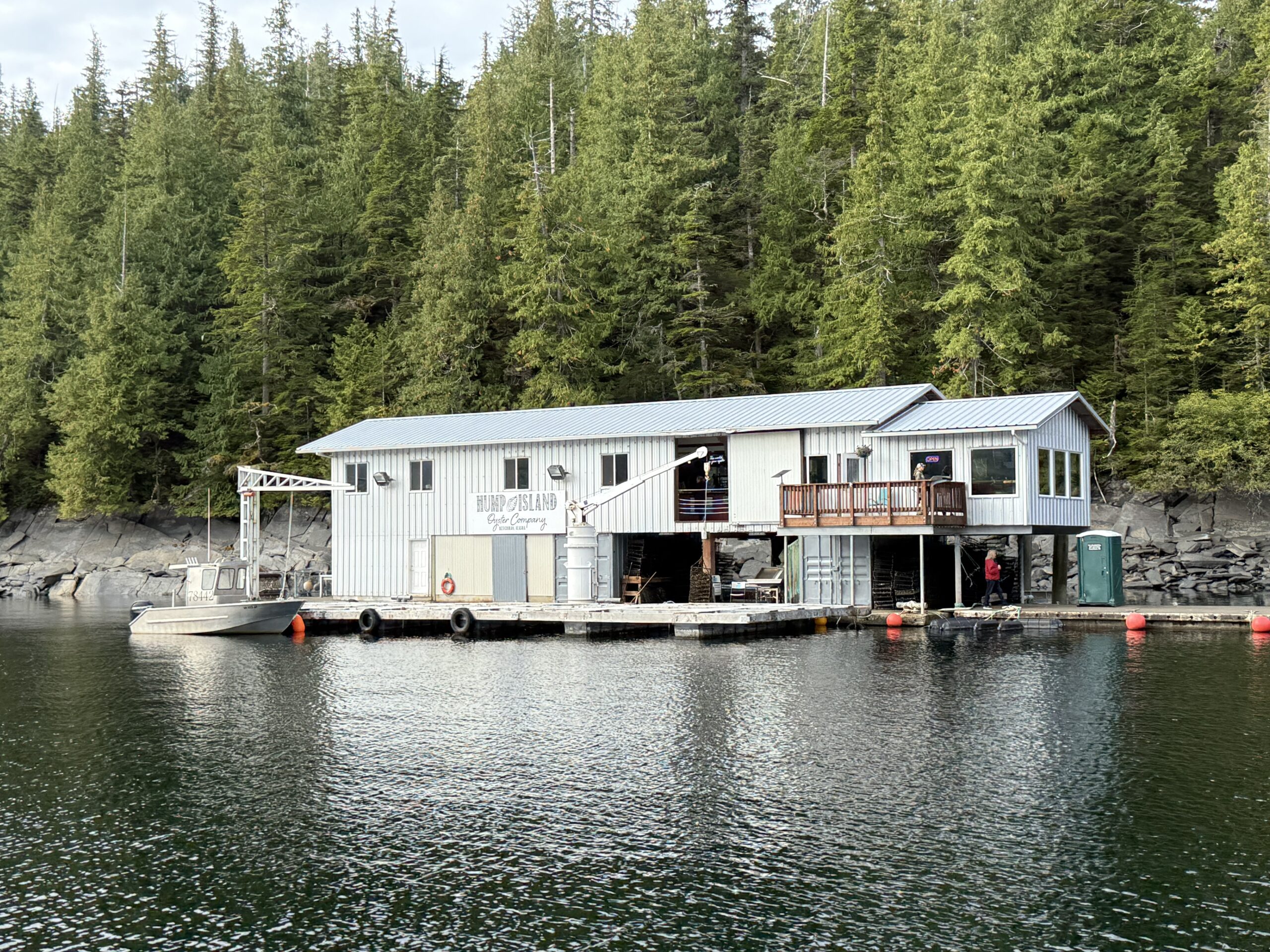
Well, actually, not Hump Island. That’s the name of the company, but they’re a few hundred yards away from Hump Island on Benton Island. Hump Island Oyster Farm was a better name. There, we had a very informational tour of how they raise oysters. It was led by essentially a group of college students who run the place seasonally.
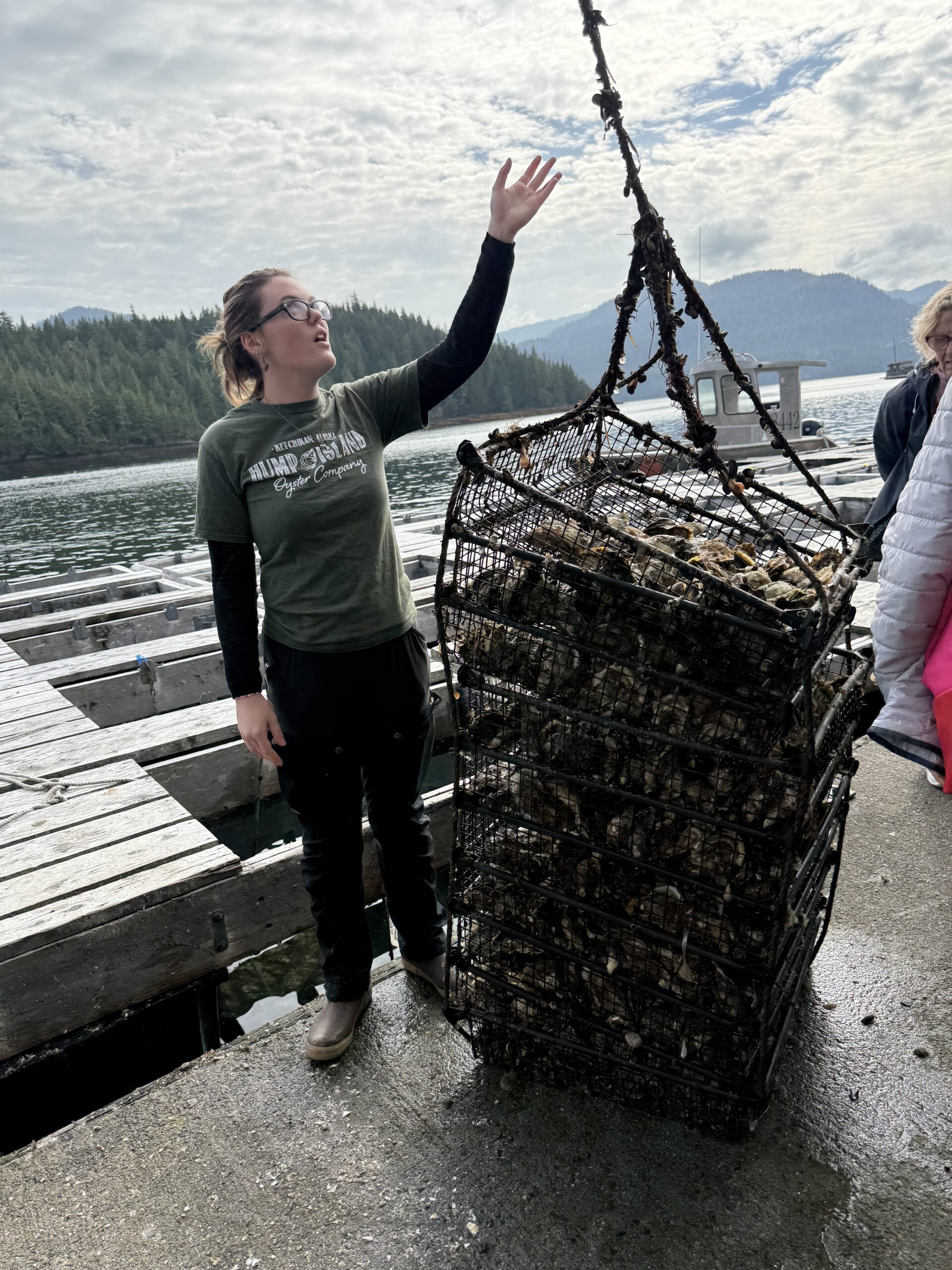
They were all very knowledgeable and passionate. It turns out that oysters don’t grow naturally in Alaska, so you’d think that they might be an invasive species. It also turns out that the water is too cold for them to go through their normal life cycle.
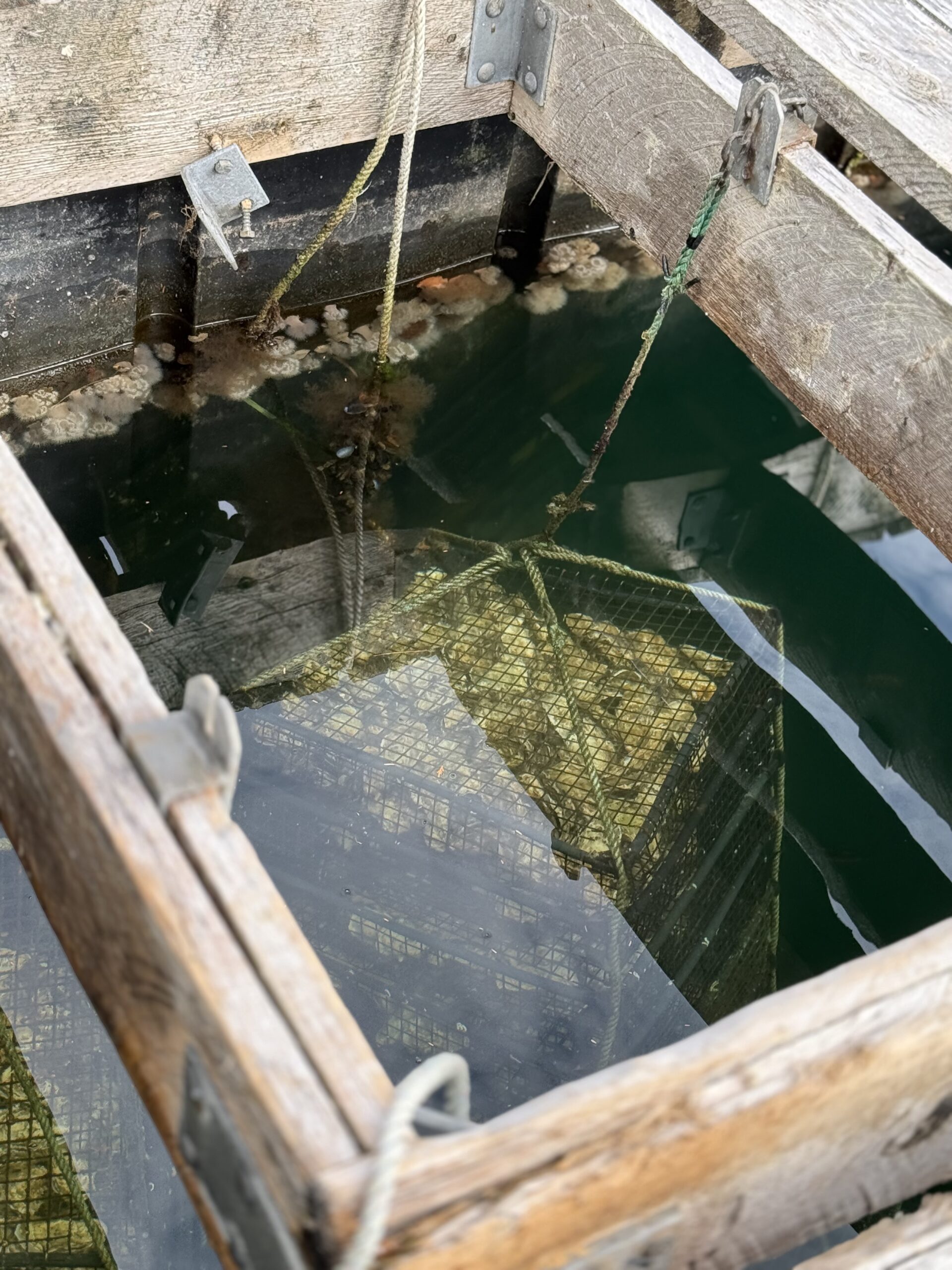
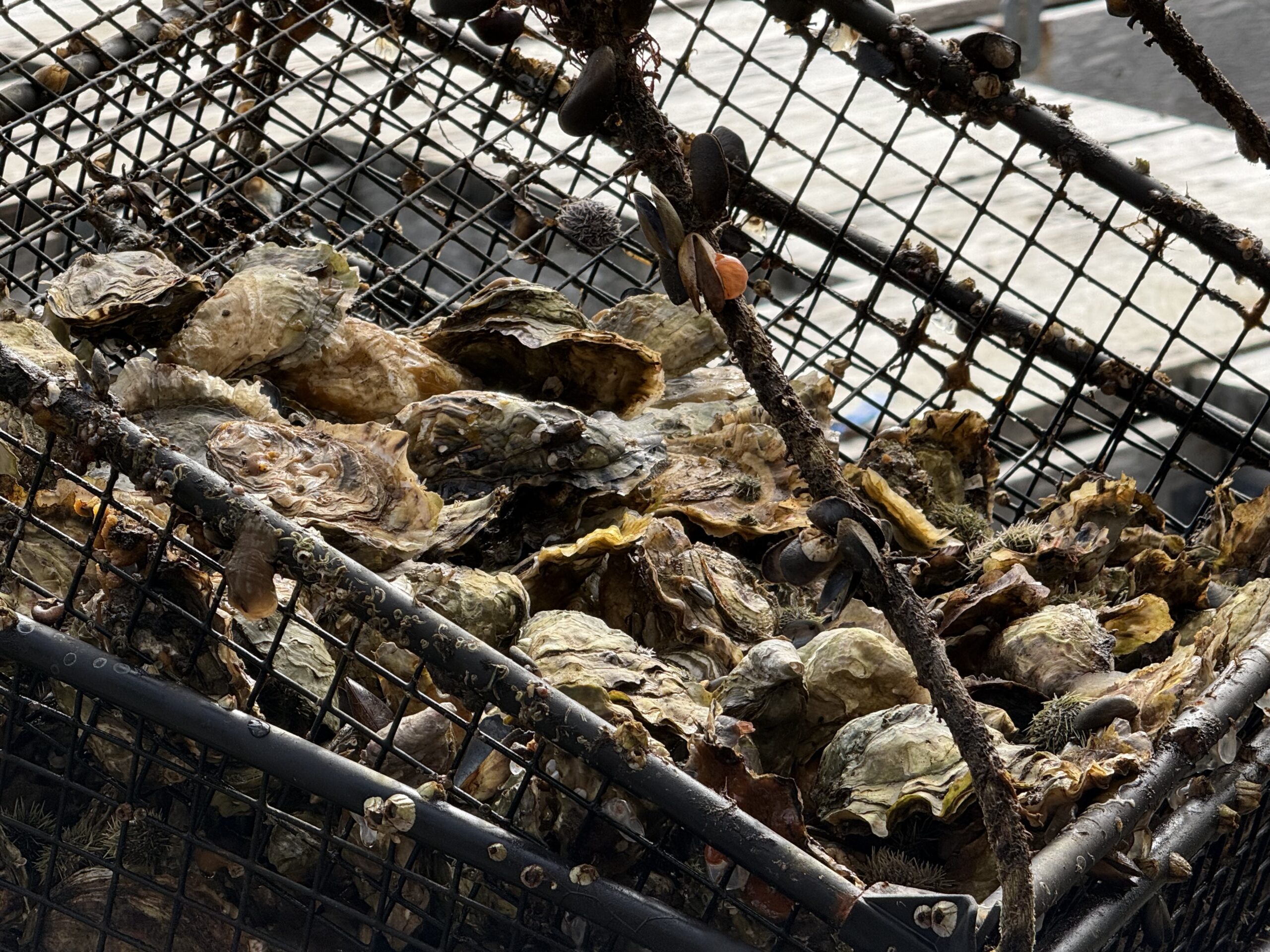
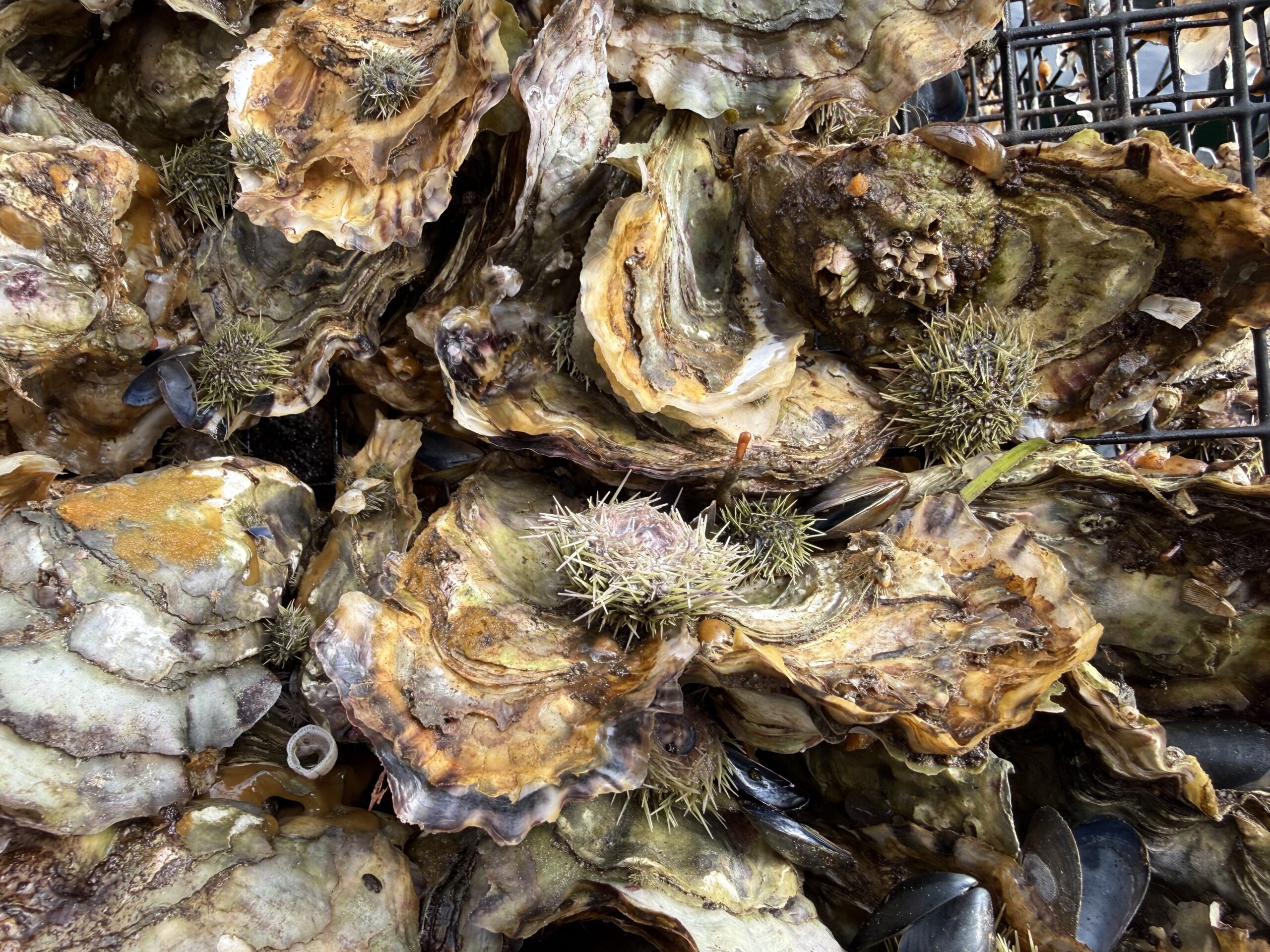
Apparently, all oysters start out as male when they’re microscopic, and at some point, after a few years, half of them become female. The water is too cold for that to happen here, so all of their oysters are male, and therefore there’s no risk of them spreading to the surroundings. So where do they get their oysters? They bring them in from Hawaii, 3 million at a time, in a small crate. As I said, they’re very tiny when they’re first born. Then they raise them in small screened bins for the first couple of years until they’re large enough to transfer out to Hump Island to the larger bins, where they harvest them at 7 years. That’s a long time to wait for an oyster, but they’re after the premium market.
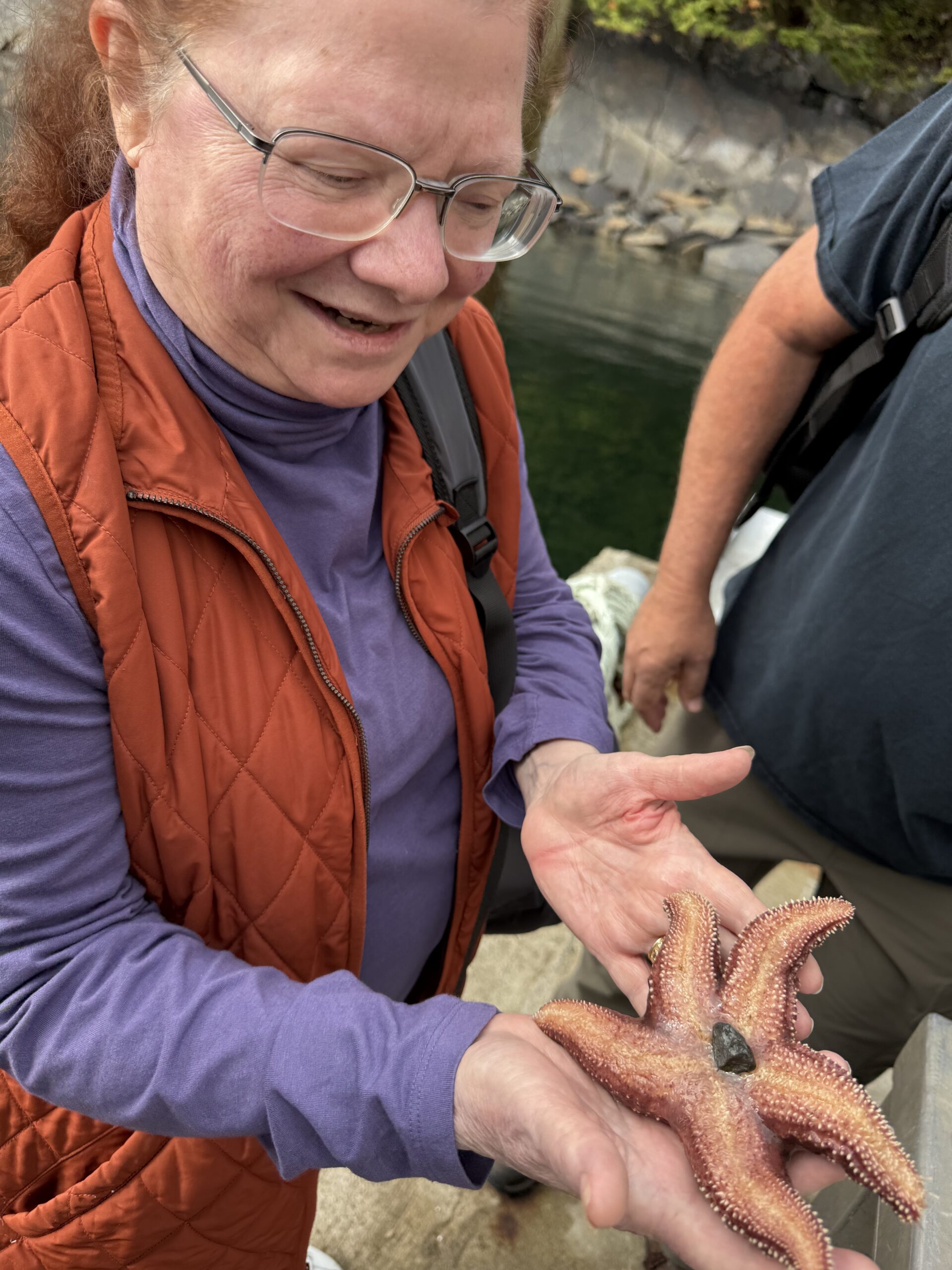
They spend a lot of time trying to deal with starfish who get into the oyster cages and eat the oysters. One solution is sea anemones, which eat the starfish. But they also pluck the starfish out. They can’t cut them up because then you just end up with more starfish. Instead, they transport them all out to the middle of the sound and dump them where they can’t do any harm.
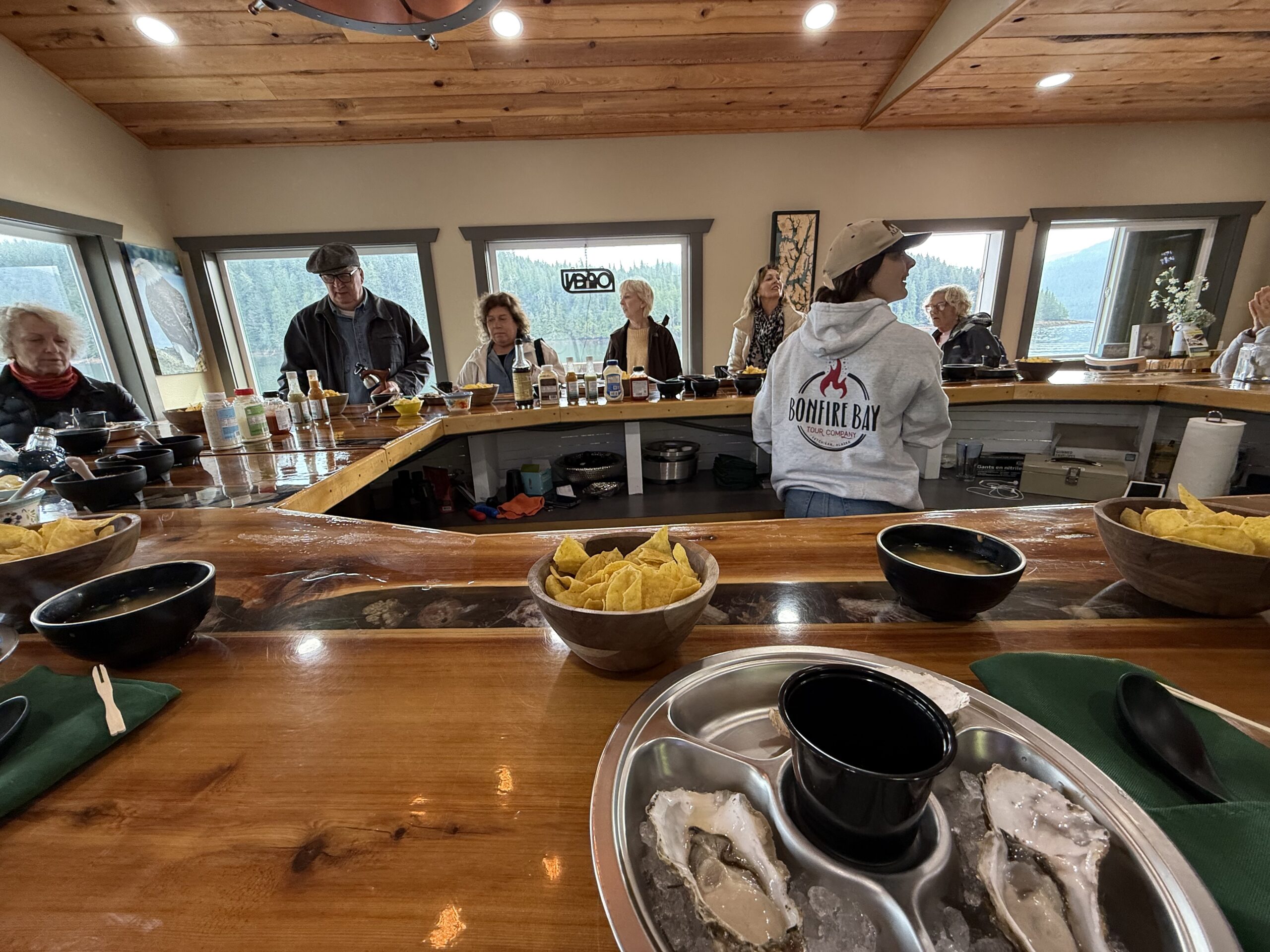
Of course, they had an oyster bar at their facility, and we had a tasting of three oysters. One of them had been grilled in the shell on their barbecue, and they had some other food that you could order. We had an amazingly delicious fish chowder that had big hunks of salmon and pieces of oyster in it — one of the best chowders I’ve ever had. You could also buy beverages, and two were included: a glass of champagne, which was a pleasant surprise.
After that rather hearty snack, we took the boat back to the dock and took the van back to the ship, where we reconvened at the culinary center for a cooking class led by the chef.
In the class, we made a blackberry-based cocktail and cioppino that included clams, mussels, fish, and shrimp with a tomato-based sauce and an assortment of herbs. We learned all about how cooking in fat draws the moisture out of onions, and why you should never follow recipes that tell you to put the garlic in before onions, because the garlic quickly burns and should only be added at the last minute. We learned about the difference between spices and herbs — a distinction I had never really grasped before. Spices are from hard things like roots and bark, ground up, whereas herbs are leafy or from stems, and so they tend to be treated differently during cooking. You want to put the spices in early so that their flavor can suffuse your sauce or stock, and you want to put the herbs in later so that they don’t turn bitter and contribute to the freshness of the flavors.
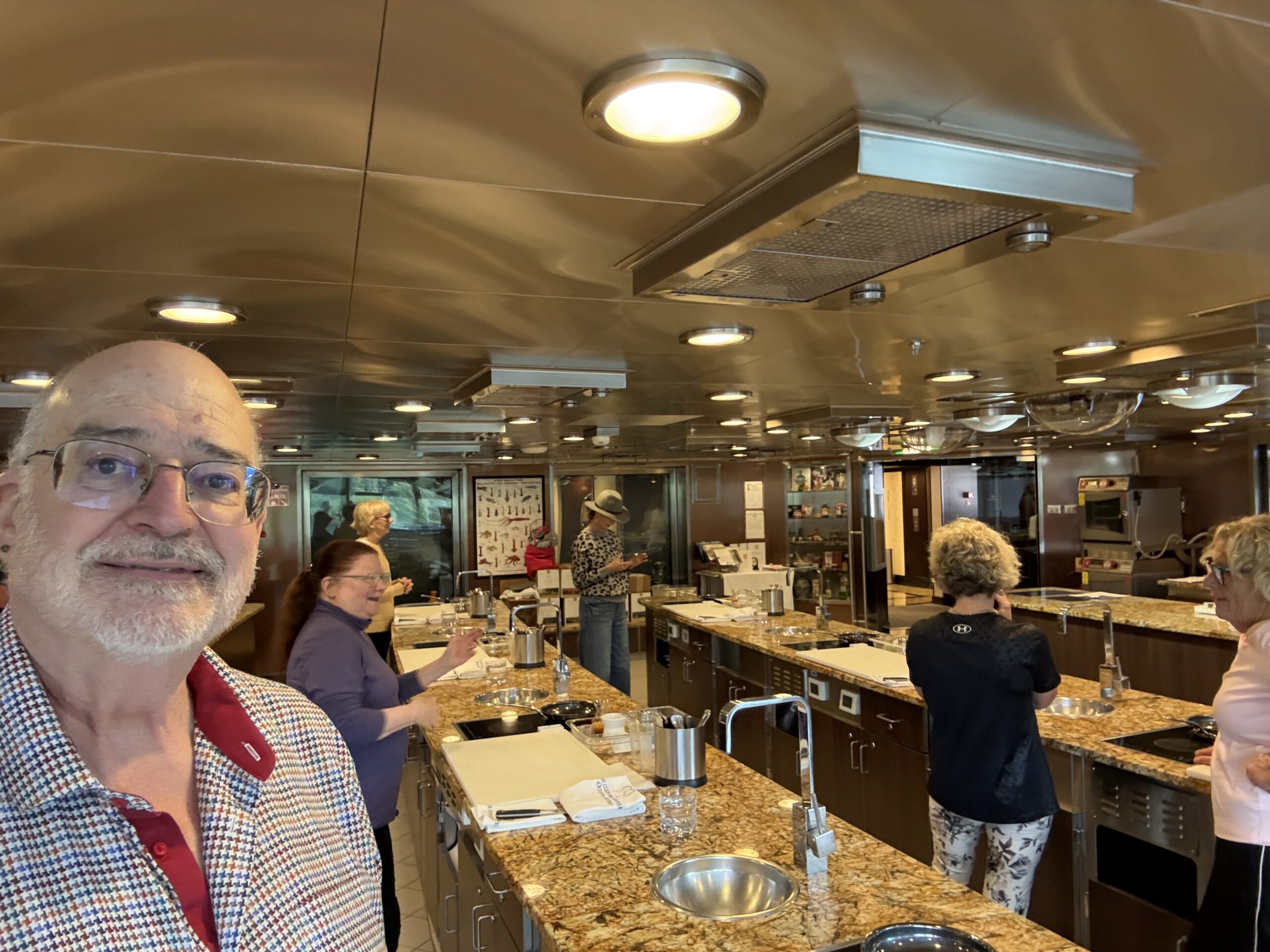
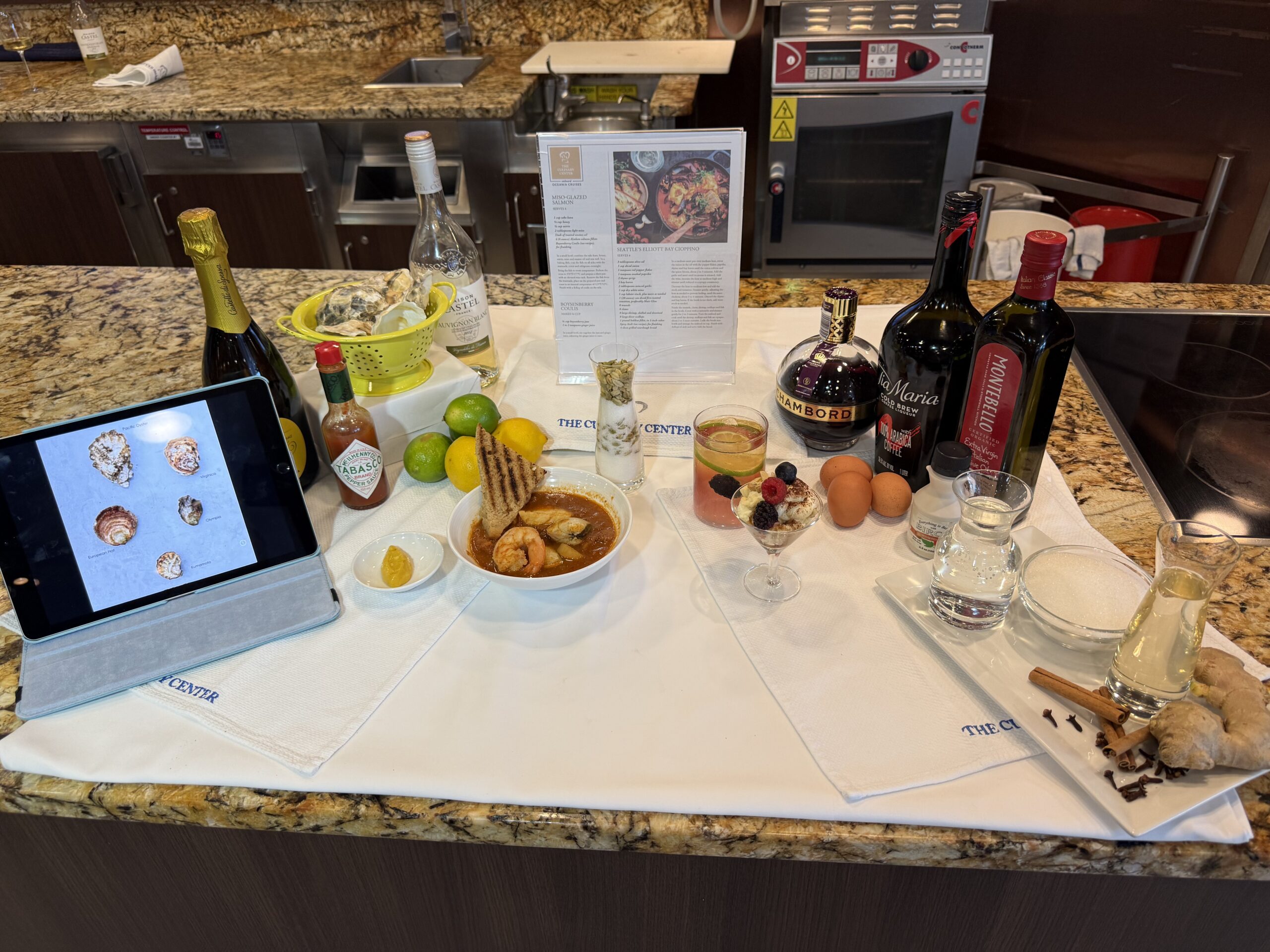
The cioppino was delicious, but I must confess that was probably mostly due to all the work that went into making the lobster stock that we started with, which included toasted and ground-up lobster shells.
We finished by making a parfait based on a tiramisu concept using Tia Maria liqueur and ladyfingers. This tour seemed like it was really underpriced at $129. I would have been happy if only the morning’s activities had been included, and that would also have been a reasonable price for the very informative cooking class. I’m not sure why they were bundled together, but it was one of the best shore excursions we’ve ever been on.
After that, we were pretty full — which was just as well, because dinner that night, back in the main dining room, turned out to be a rare disappointment for Oceania. We had a just-okay sirloin steak and a fairly awful steak Diane, which was not flamed and never had been. It just lay there, kind of like a shingle covered in dog food gravy.
Tuesday, September 15, 2026 — Sitka
Weather: beautiful, even sunny for part of the day — despite an original forecast for rain.
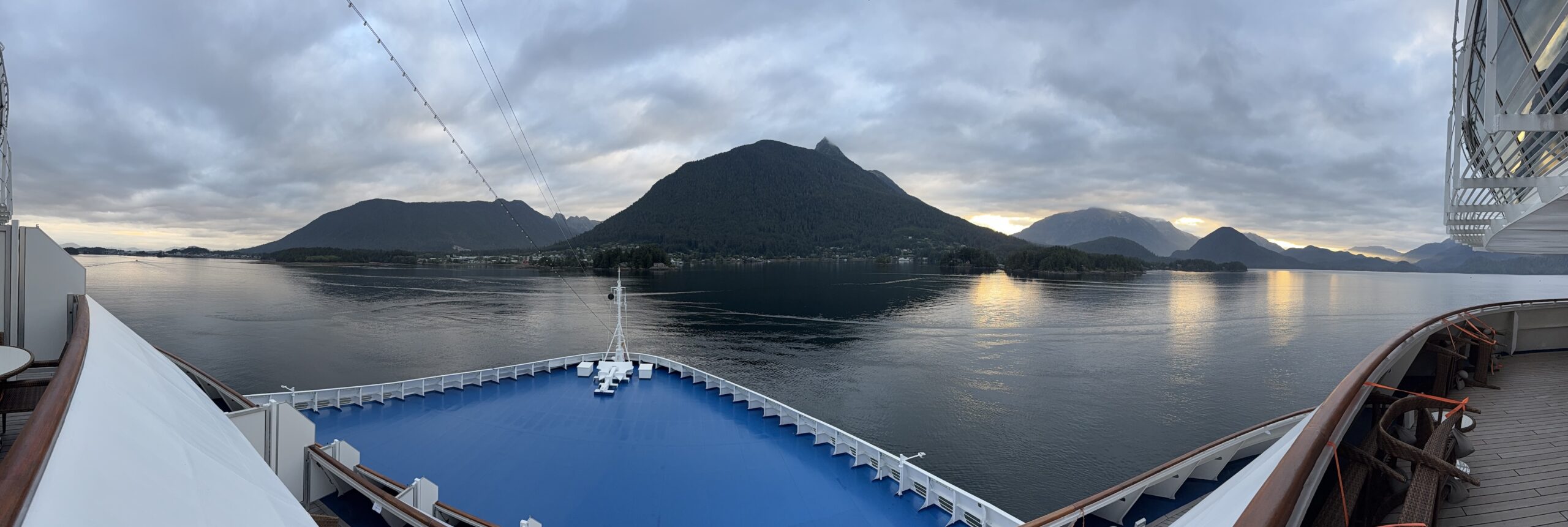
The original forecast for Sitka was rain, so we were delighted that not only was it not raining, it was actually getting sunnier as the day progressed, and very temperate — so much so that most of the time I didn’t even have my light jacket on. We’d never been to Sitka before. It, too, is on an island. It’s a bit smaller than Ketchikan, and they don’t have a dock for cruise ships, so we tendered over for our Best of Sitka tour.
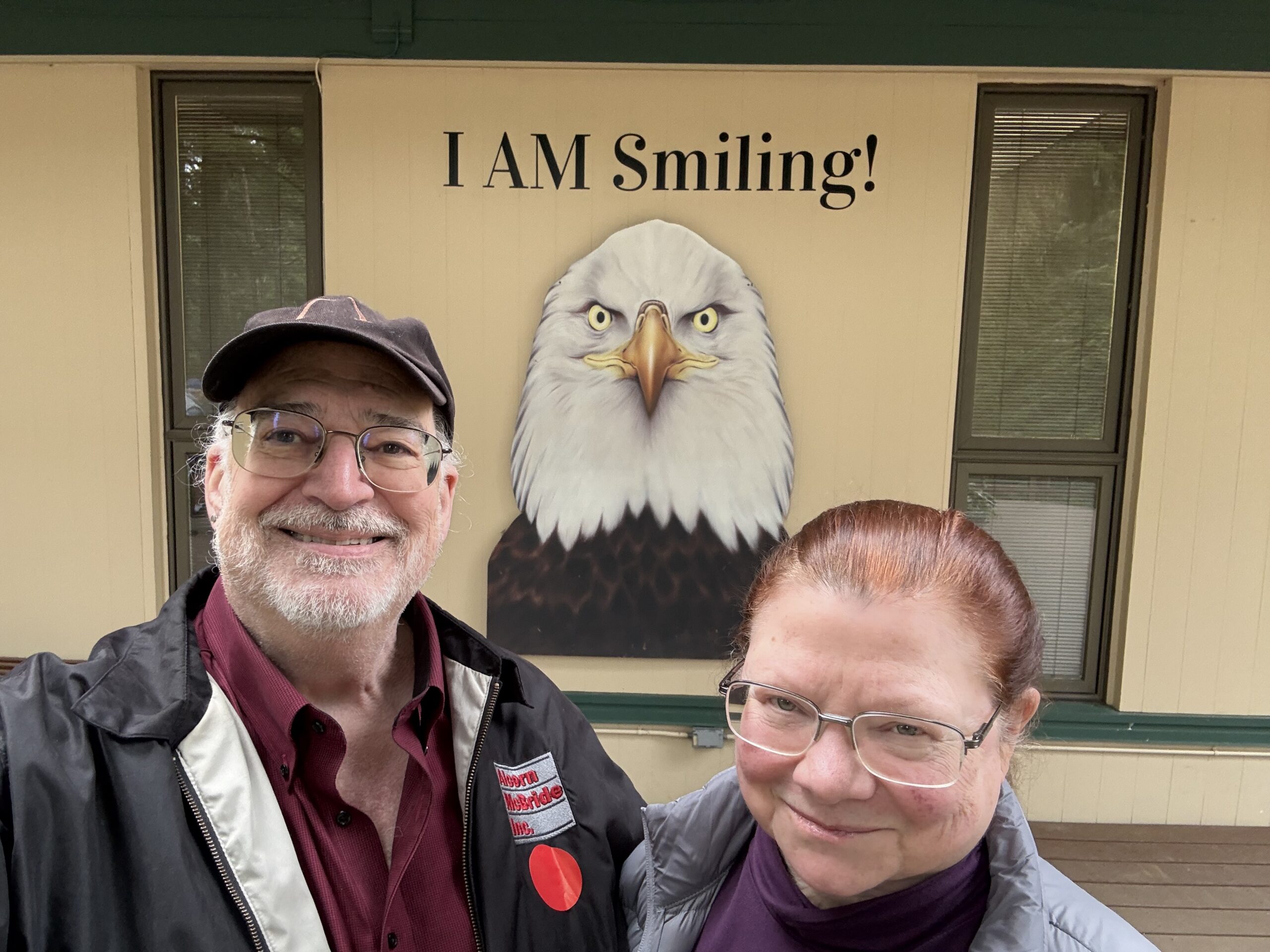
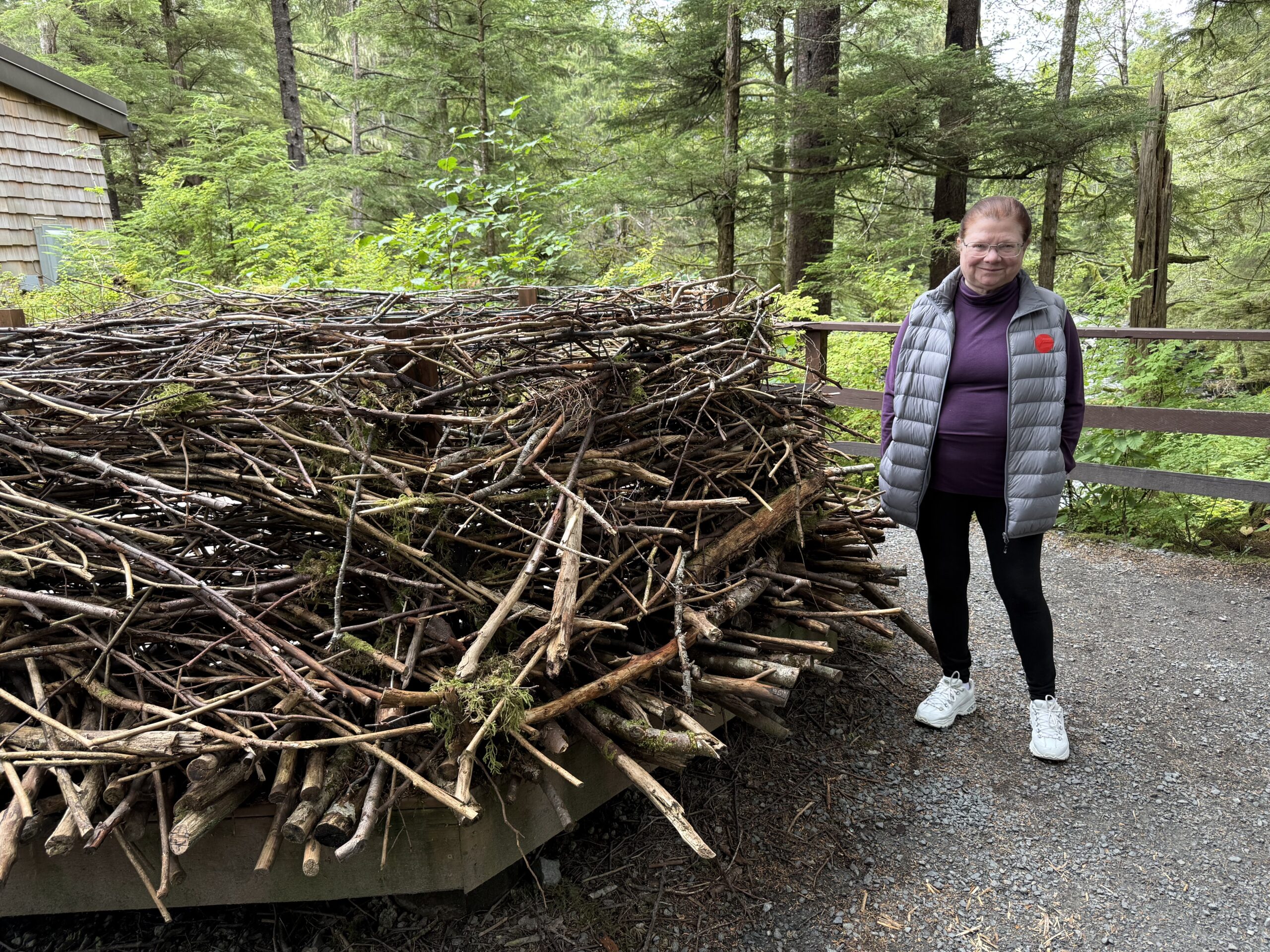
A short drive took us to the Raptor Center, and I was not expecting all that much. Birds are nice, but they don’t fascinate me. This was an extremely impressive facility.
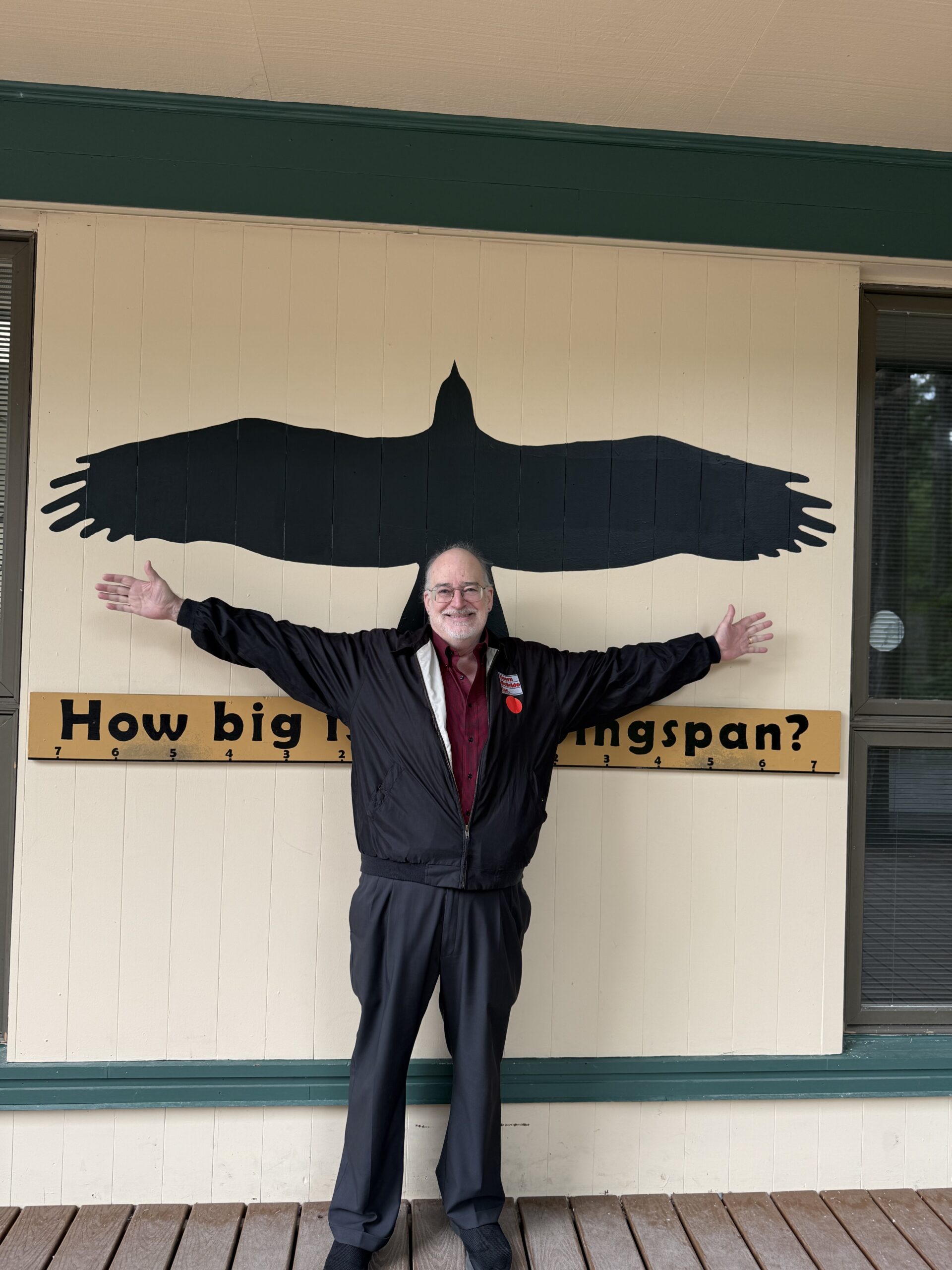
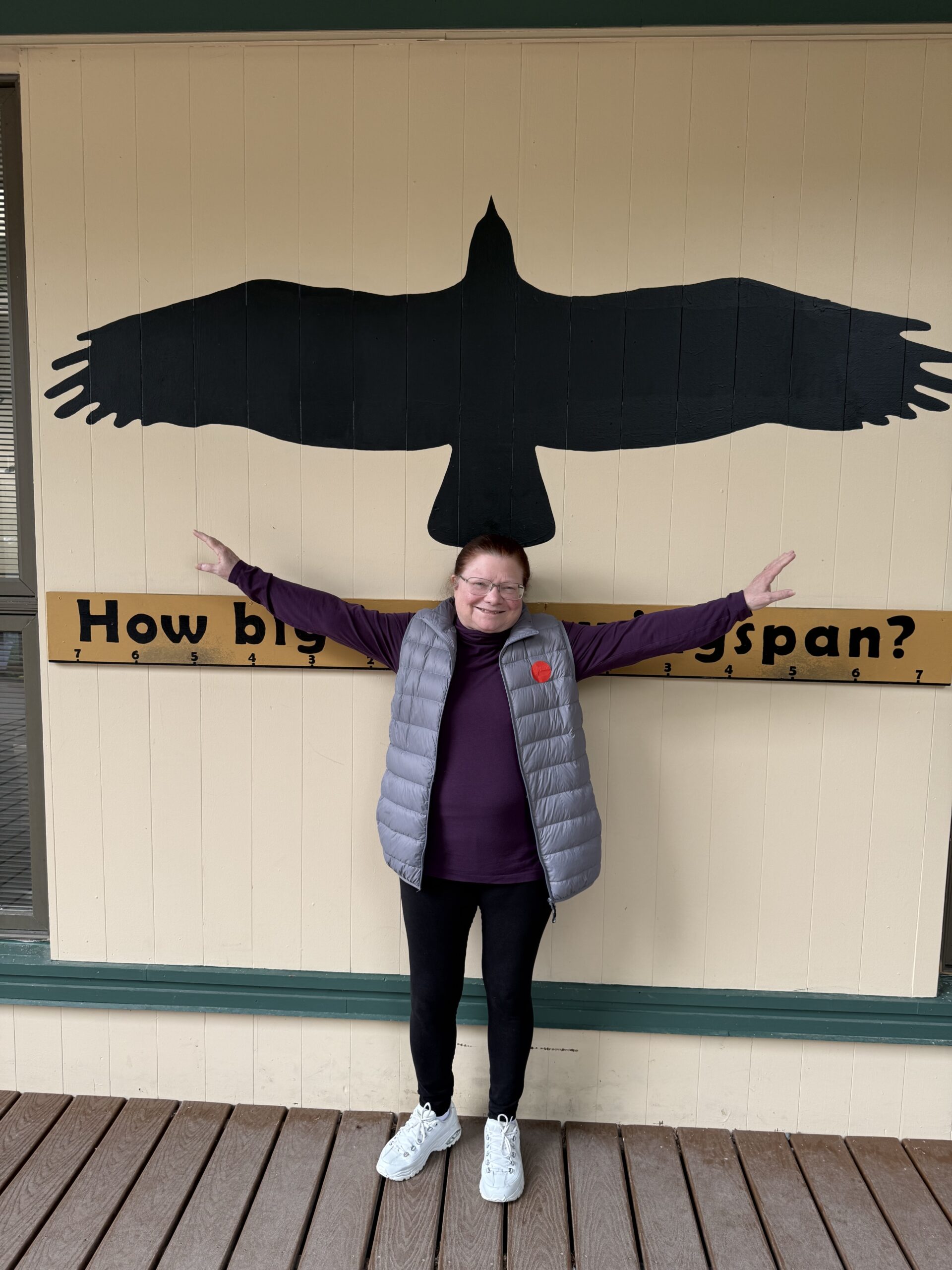
You start in a long, dark hallway that looks out into an immense multi-story building filled with bald eagles and golden eagles who are in rehab. The goal is to release them into the wild once they are able to fly to the highest ropes in the facility. In the meantime, they have a very naturalistic setting, because there is a one-way glass panel the entire length of the hallway — the birds are undisturbed by the presence of the visitors. Outside there are more birds, and these are ones that cannot be released because of disabling injuries that would prevent them from thriving in the wild. Some of them are in aviary-type cages, but most of them are in large open areas with no netting on top to restrain them. They simply can’t fly out, so it’s very much as if they’re living in the woods surrounding the center.
A trail of about half a mile leads you through dense woods and marshy areas and takes you down by the Indian River, and this was the most impressive part of the visit. The river was more fish than water. Salmon are migrating upstream to spawn, and there are a lot of them — almost an incomprehensibly large number of them — making the journey. There were also some very rocky rapids and a waterfall, and it was hard to imagine how they would be able to make their way up. But indeed, when we got beyond there, there were more salmon resting in the pool beyond before continuing their journey to wherever. A really stunning walk.
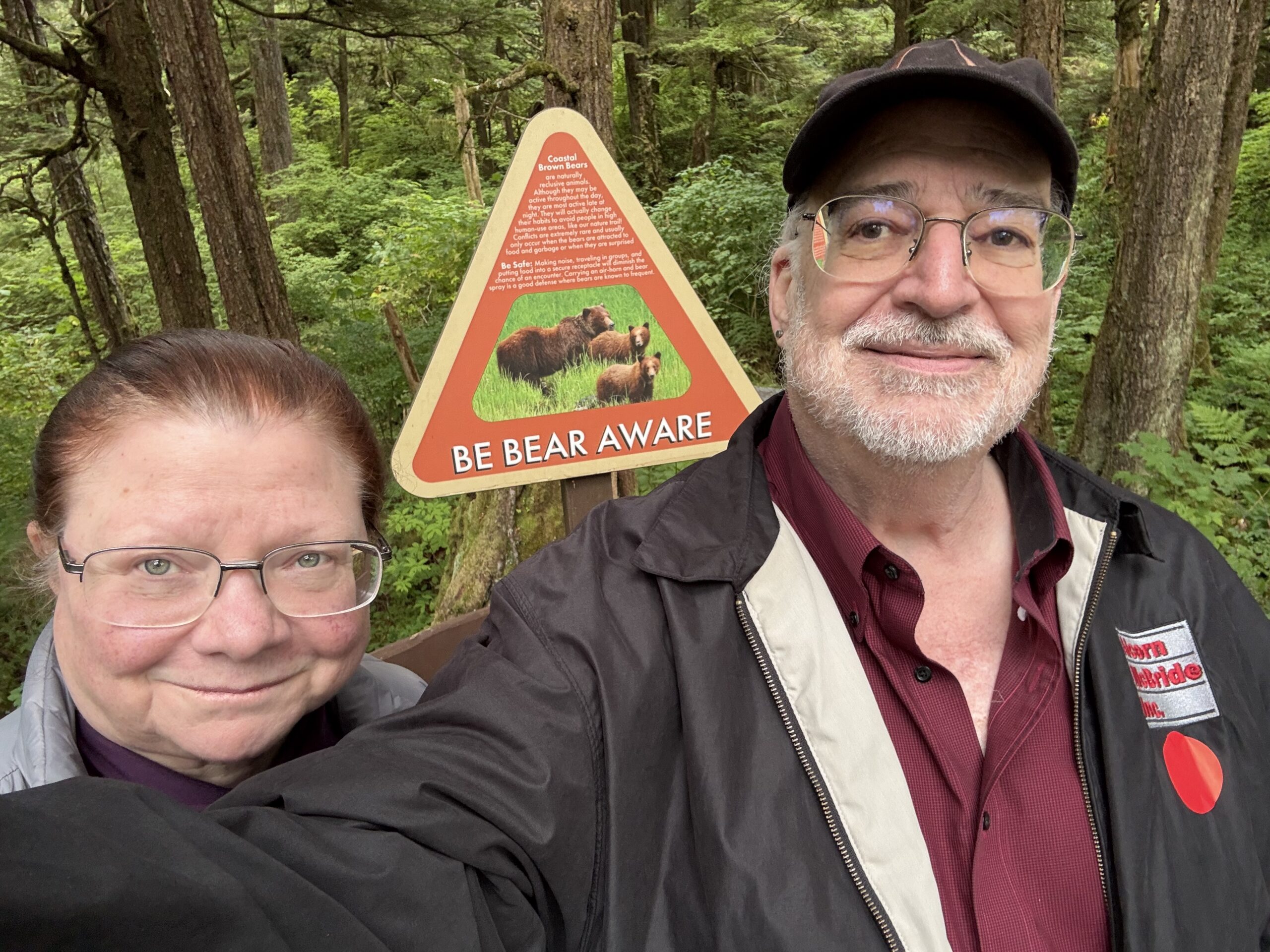
Our next stop was the Fortress of the Bear. This facility houses eight brown and black bears. They live in two giant circular stone enclosures that are probably 100 yards across, filled with streams, water, and logs — very naturalistic, with private dens all around that they can go into.
These bears cannot be released into the wild because they all grew up from orphaned cubs. Once a bear has been in contact with humans, the law prohibits them from being released back out into the wild. They’ve spent their whole lives in this facility, and it seems like a pretty pleasant life.
While we were there, they put wild salmon into the pond of one of the enclosures, and the bears were excitedly waiting for the gateway to open so that they could travel underneath our causeway and over to hunt the wild salmon. It’s a great facility for seeing bears close up, but it was, in some ways, the least interesting thing to me of the three things we did today — simply because the fact that they were captive bears made it a little bit less naturalistic.
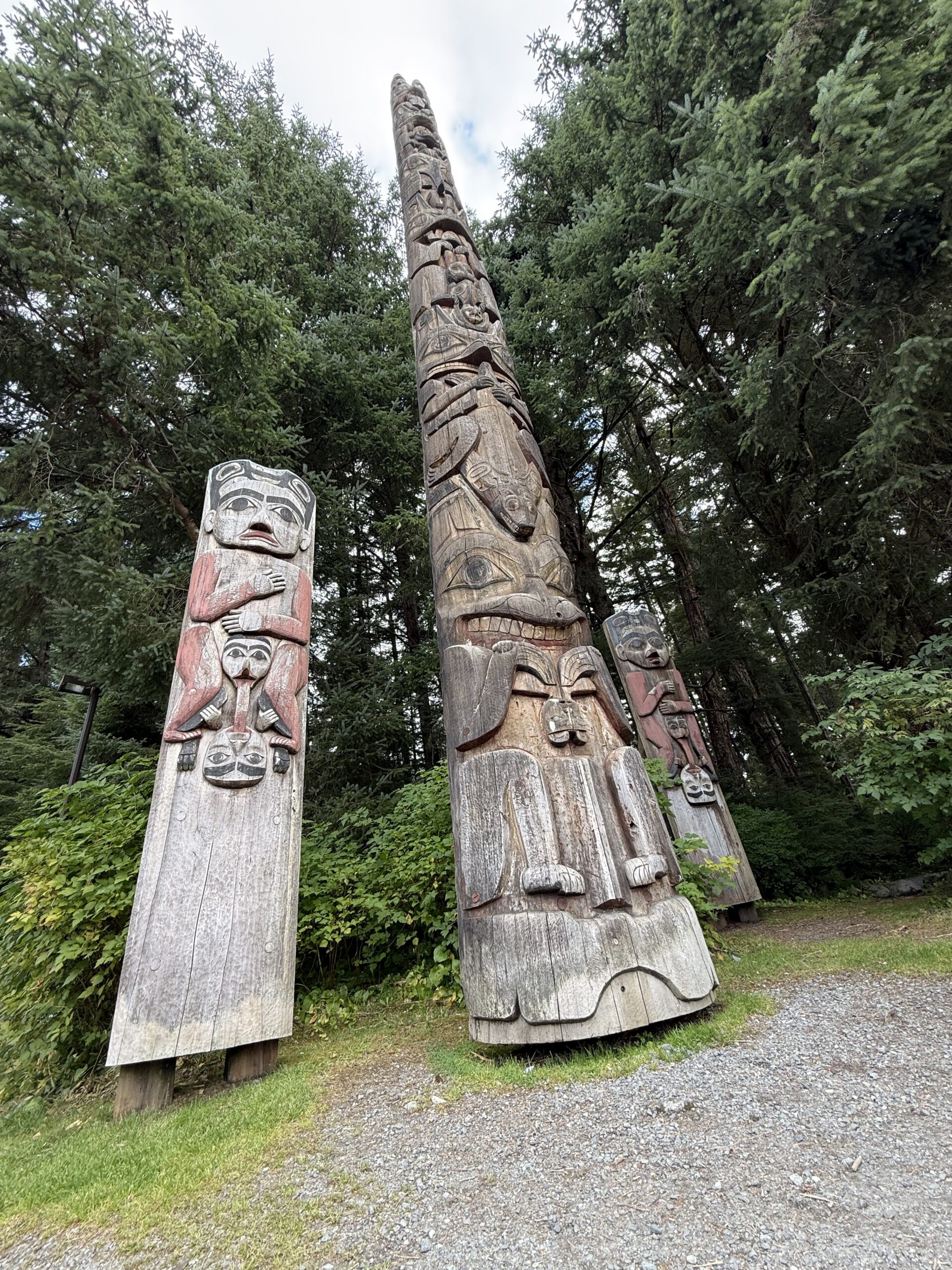
Our third stop on our Best of Sitka tour was the Totem Pole Center (Sitka National Historical Park, known locally as Totem Park). As you might expect, they have a lot of totem poles there. Unfortunately, I don’t find totem poles all that fascinating — they look a lot alike — but they do have a one-mile walk that takes you through the forest, down by the mouth of the river where it lets out into the ocean, and there were even more salmon here than we saw upstream. Again, the water was alive with them, although some had already fallen by the wayside and lined the shores. The seagulls were definitely aware of this and were enjoying the pickings — although with simply so many salmon this time of year, there isn’t a feeding frenzy.
We learned that the bears this time of year will catch a salmon, wander off into the woods a mile or so, eat only the best parts, and leave the rest because they’re full from too many salmon. This is actually great for the environment, because they’re unintentionally fertilizing all of the forests. So this was a lovely one-mile walk that led us down along the beach and back eventually to the totem pole center, where we rejoined our bus. Did I mention that the buses around here are mostly reconfigured school buses? They have comfortable tour-bus-like seats, but clearly they started life as school buses, and that just seems very Alaskan.
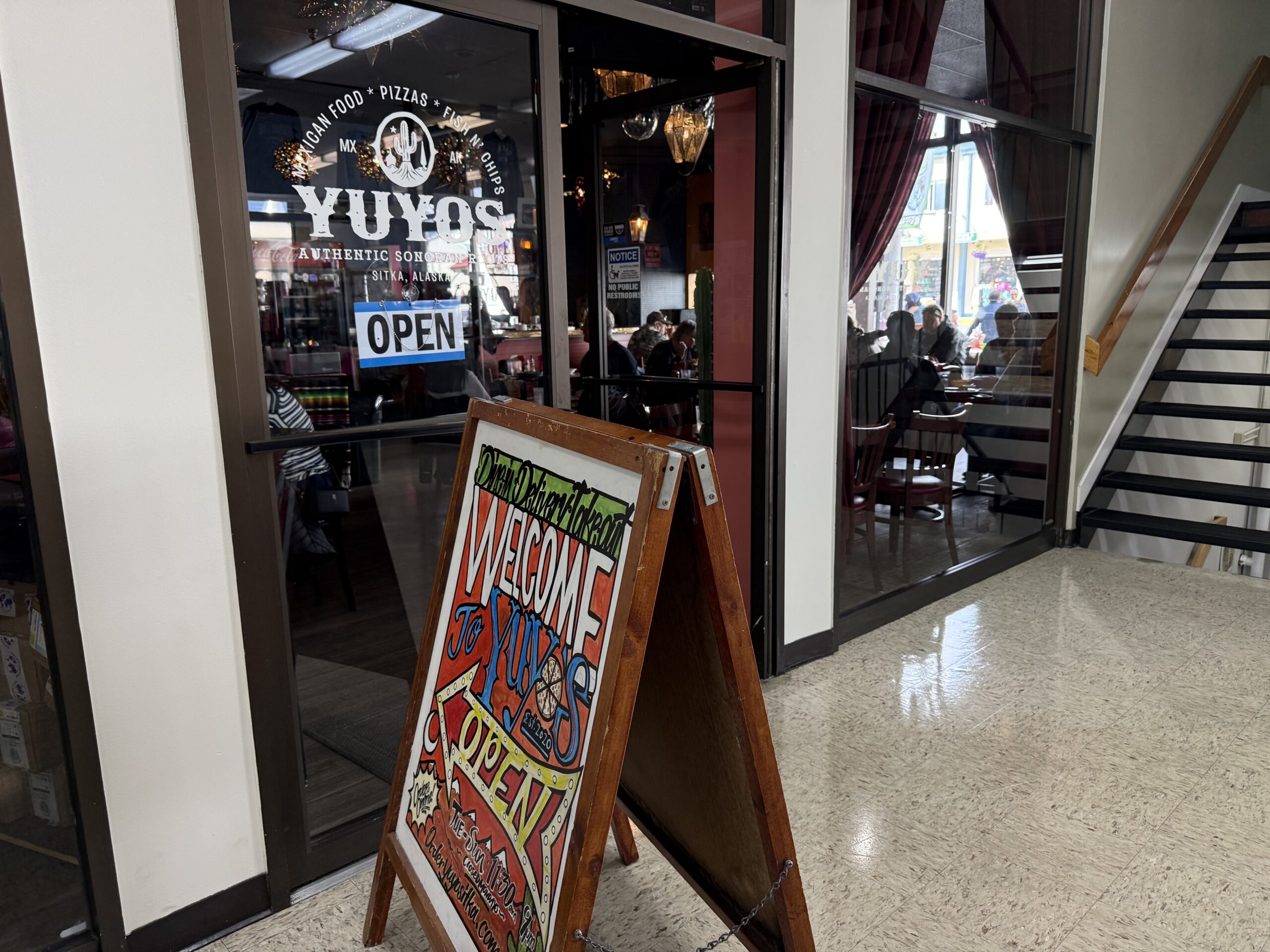
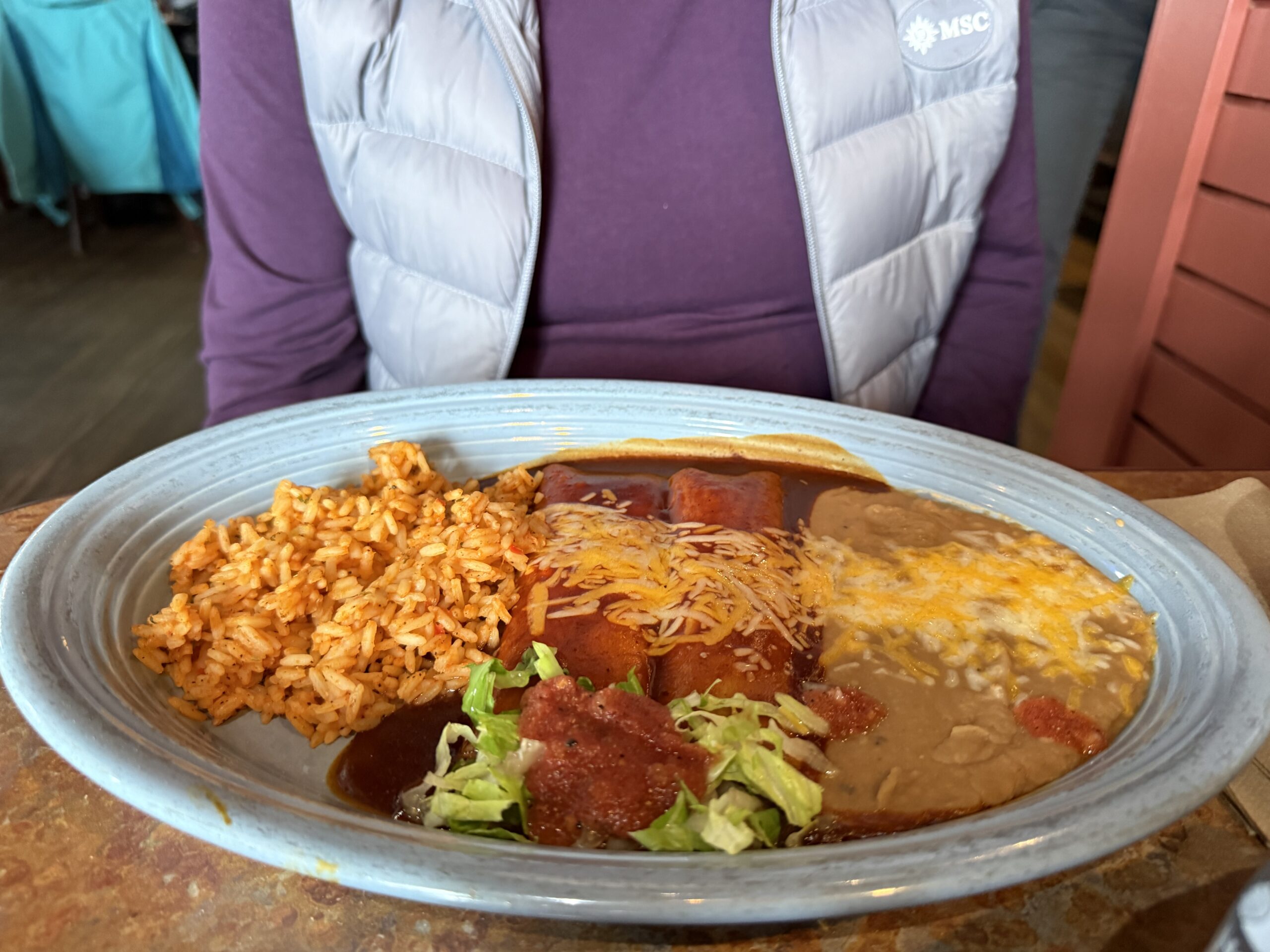
A short drive dropped us back at the tender landing, but we chose to go for a walk through downtown Sitka, which is really only a few blocks, so not too long of a walk. I had read about a good Mexican restaurant, but there were no pictures on Google, and when I got there I was surprised to discover that it was essentially a stand on the sidewalk. So much for their claim that they had inside dining.
Instead we continued walking around and ended up at a Mexican restaurant the guide had mentioned called Yuyo’s. The reason the guide mentioned it is that Yuyo’s is well known for their pizza. He had a friend who grew up in Sitka and was in college before he discovered that pizza is not actually Mexican food. We didn’t have pizza, but I must say that the tacos al pastor and the chili relleno were outstanding. A funny spot to get great Mexican food, this far from Mexico — it’s hard to come by even in Vancouver. Go figure.
Dinner was at the Polo Grill, which serves prime steaks, and they were substantially better than the steaks we had in the dining room. Although we still had the bottle of Amarone going, it didn’t seem like a good match for steak, so we started a bottle of Beaulieu Vineyards Tapestry 2021 (which I think is the heir to the great Georges de Latour Cabernets of the 1970s). An excellent dinner.
Wednesday, September 16, 2026 — Haines (Skipped — Too Windy to Dock)
Weather: the rain and wind caught up with us — a 31-knot gale, gusting to an effective 42 knots. Heading into the wind keeps the ship from rolling, so it is quite smooth aboard, but the rain is now hitting the windows. Three failed attempts to dock in Haines — we got within about 30 feet of the dock, but the wind kept pushing the stern so the captain could not land it. Shore excursion passengers were refunded.
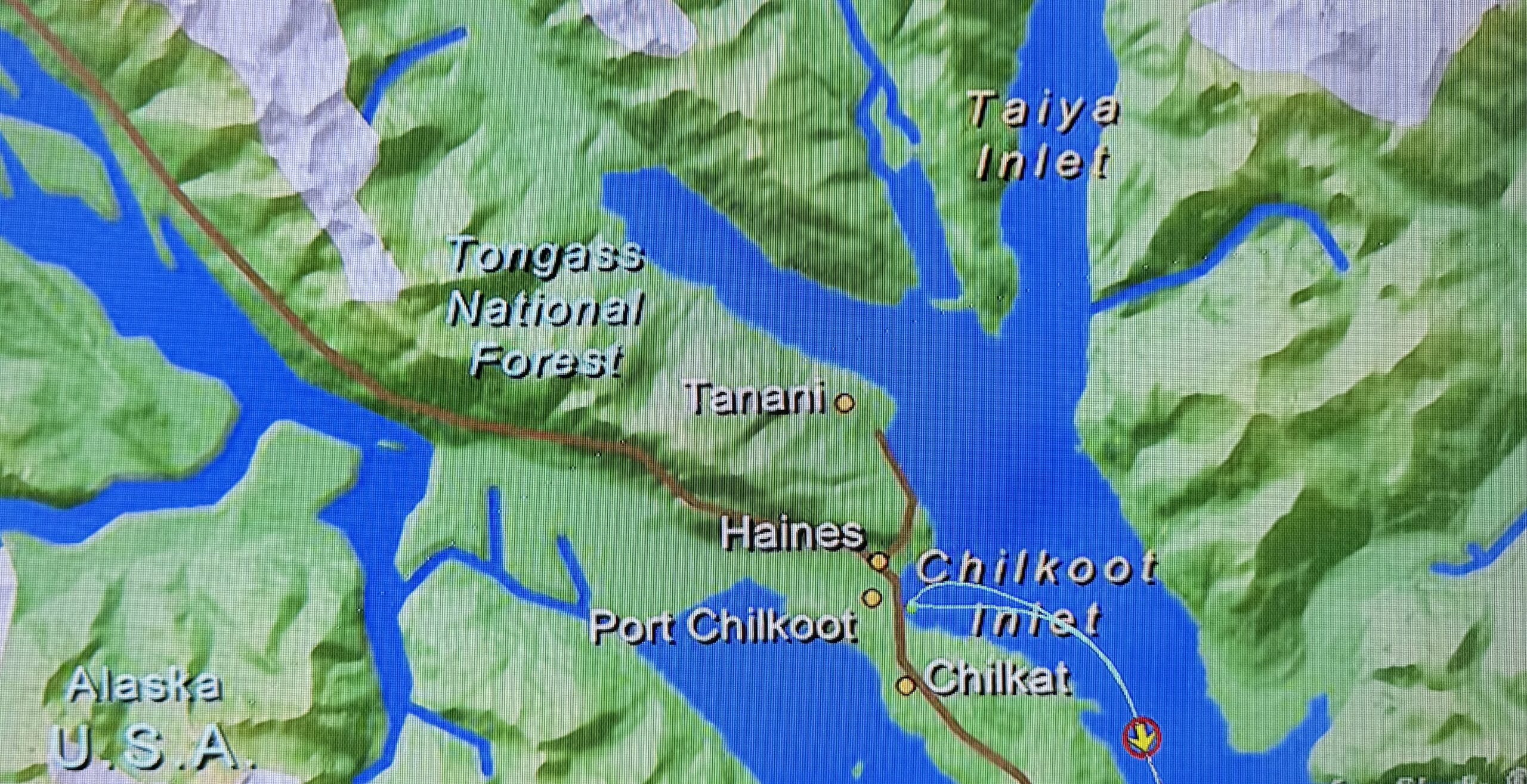
Wednesday brought the gale. Both the wind and the rain caught up with us after three failed attempts to dock in Haines — we got within about 30 feet of the dock, but the wind kept pushing the stern, and the captain couldn’t land it. So we sailed on. I think the passengers with shore excursions were probably relieved to get a refund instead of having to go out in it.
With no shore day, everyone had the same idea, and we all went to breakfast in the dining room. They normally do about 100 covers for breakfast; today they were at over 300 and counting. We were in no hurry. After all, we didn’t really have any place to go.
We spent the day wandering around with a 31-knot gale outside — an effective 42, since the ship heads into the wind to keep from rolling. It was quite smooth aboard, but the rain kept hitting the windows for the rest of the day.
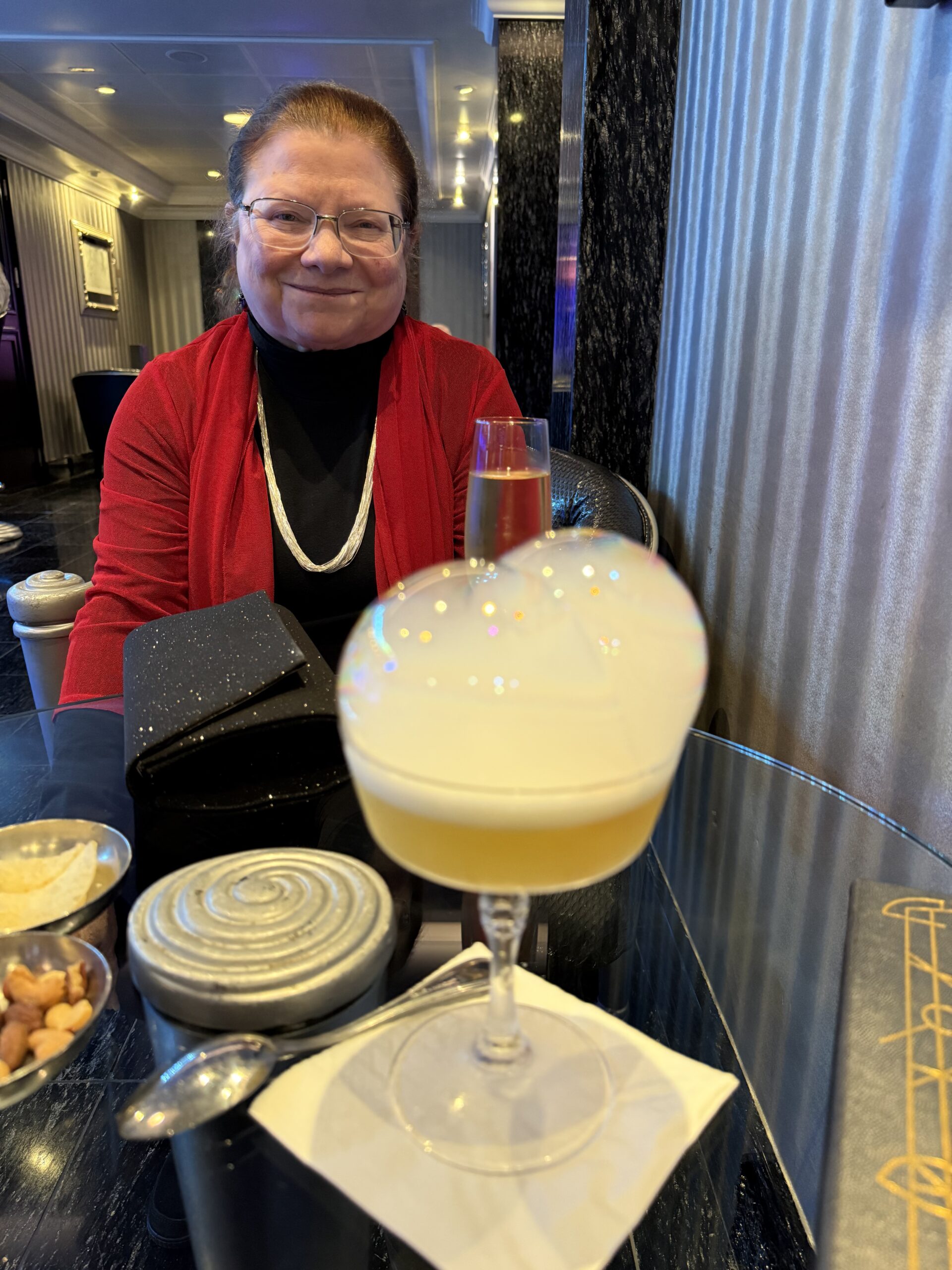
Because breakfast was hearty and a bit late due to the popularity of the dining room, we skipped lunch, but we were getting a bit peckish in the afternoon, so we went to the afternoon tea in Horizons at 3:30. We took our final two glasses of Pommery champagne with us (left over from the gift bottle in our suite) and enjoyed some silly little sandwiches and some tea in a pleasant atmosphere while the string quartet played.
Dinner was at Jacques, which is Jacques Pépin’s signature restaurant. He nominally has some input on all of the cuisine on Oceania, and it’s nice to find a restaurant that is still steeped in traditional French cuisine. For years, I’ve been talking about how great the horseradish-crusted lamb chops were that I had at a long-gone restaurant in Altamonte Springs called Maison Jardin. I think I finally had some that topped it at Jacques. They were absolutely delightful. It was also great to see a trolley of genuinely French cheeses. They even had our favorite, Époisses, which most restaurants forgo because it is stinky.
The gale-force winds continued into the night as we slowly headed south.
Thursday, September 17, 2026 — Wrangell
Weather: beautiful, water like glass — hard to believe we’d ever been in gale force winds.
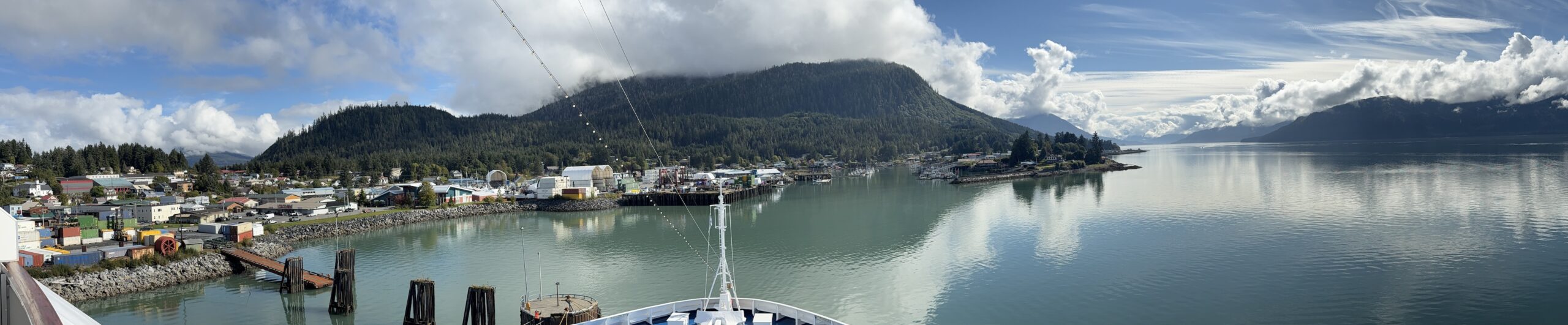
By the time we woke, we were almost docked in Wrangell with not a breeze, a glassy sea, and low clouds. This is not a tourist town. It’s a true Alaskan town devoted to fishing, so the streets aren’t lined with jewelry stores and T-shirt shops.
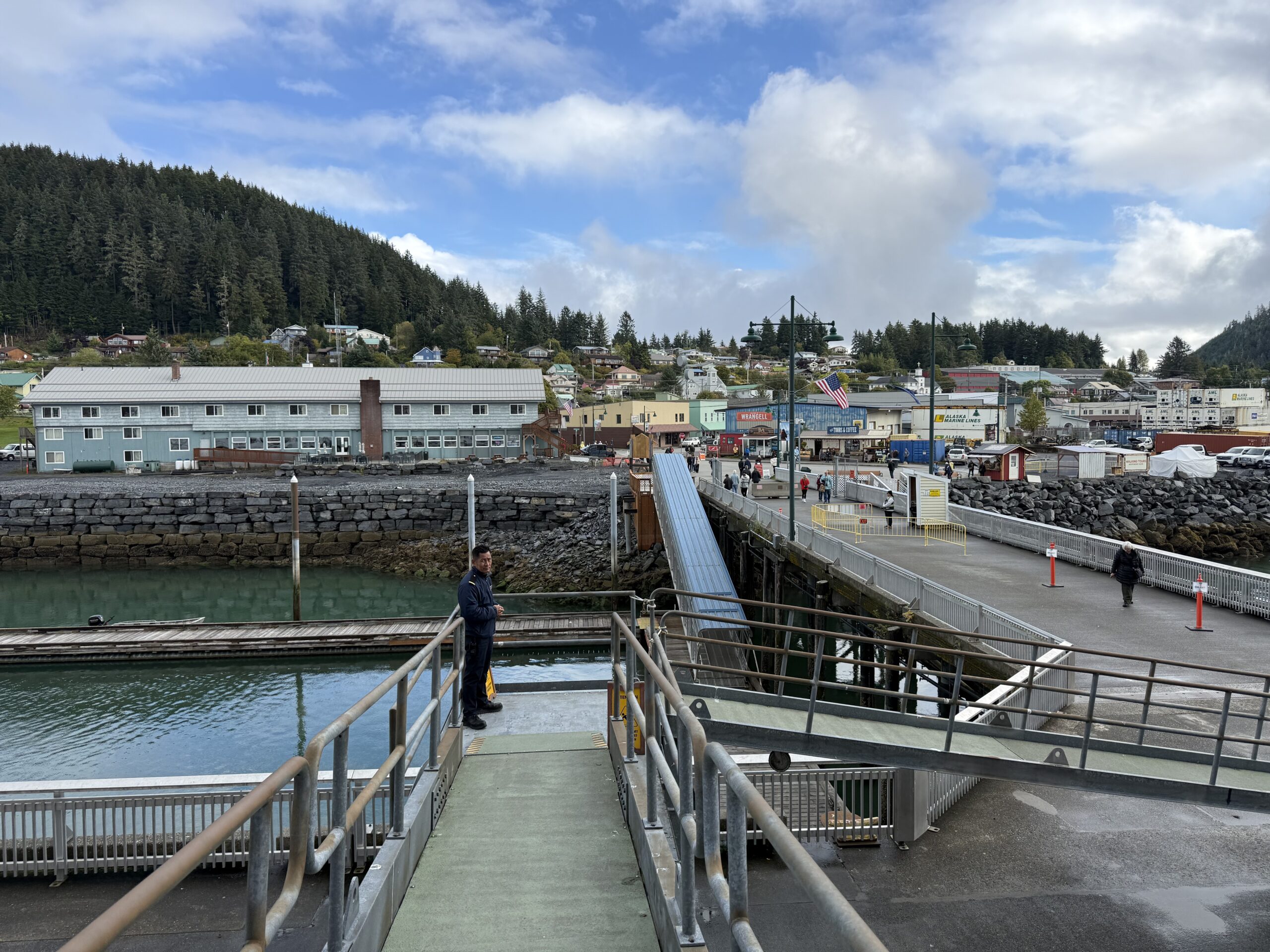
The forecast was for rain, but it turned out to be an absolutely glorious day in tiny Wrangell. We took a brief walk up and down the short main street of the city, which was right next to the boat. When they say the ship docks in Wrangell, they literally mean the ship docks in Wrangell.
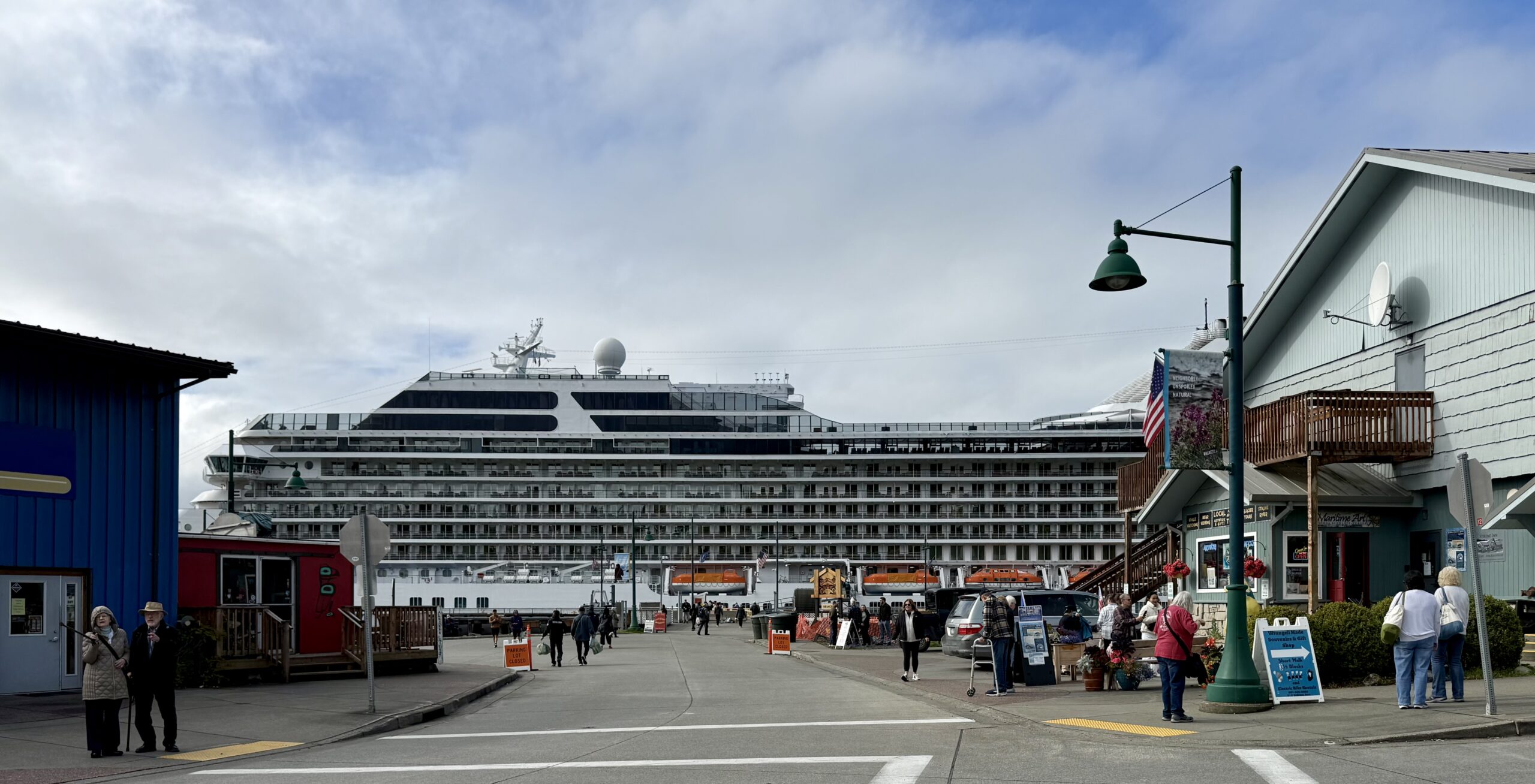
There were a few residents who had tables set up along the main street selling this and that. There was a drug store that was almost more like a dollar store, with a random assortment of all kinds of merchandise, some of which looked like it had been there for a very long time. Linda found a small folding zip-up bag that’s about the size of a wallet, which she thought would be useful. Other than that, an Ace Hardware store, and a place that seemed to be selling used boat motors and carpet, there wasn’t a lot open.
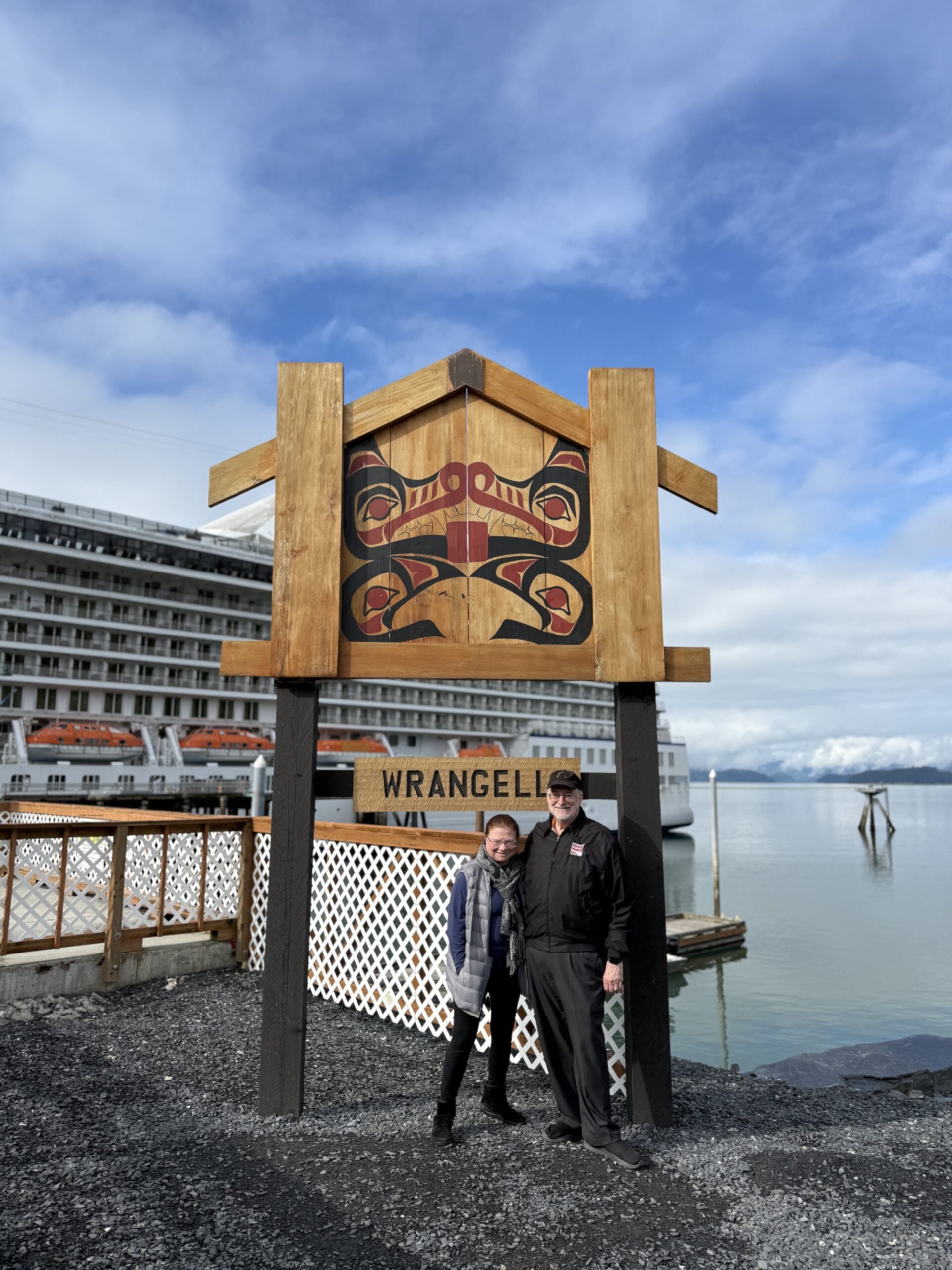
We spent a restful afternoon getting caught up on computer things in the cabin, had a sandwich outside at the Waves Grill, and then watched the ship sail into the glassy sea in the afternoon for the day-and-a-half trip to Vancouver.
Thursday night we had dinner at Red Ginger, which is Linda’s favorite specialty restaurant on board. I like it, but we are surrounded by so many great Asian restaurants in Vancouver that it’s not quite the same treat for me. Her least favorite was Jacques because she doesn’t like the lighting, but I think it’s my favorite food because of that spectacular lamb and the treat of having real French cheeses. The lamb was so good, and Red Ginger is right next door, so I had it there on Thursday night. It was indeed exactly the same lamb chops, but the preparation paled compared to the horseradish crust at Jacques.
Friday, September 18, 2026 — Inside Passage Scenic Cruising
Friday was our day at sea. It started out so foggy we couldn’t see where we were, and the ship’s foghorn was blowing, but by the afternoon it had turned into a stunning day. We just had lunch and dinner in the dining room, but in between them we had our cooking class, the second with the Oceania culinary team and our wonderful teacher, Chef Leah.
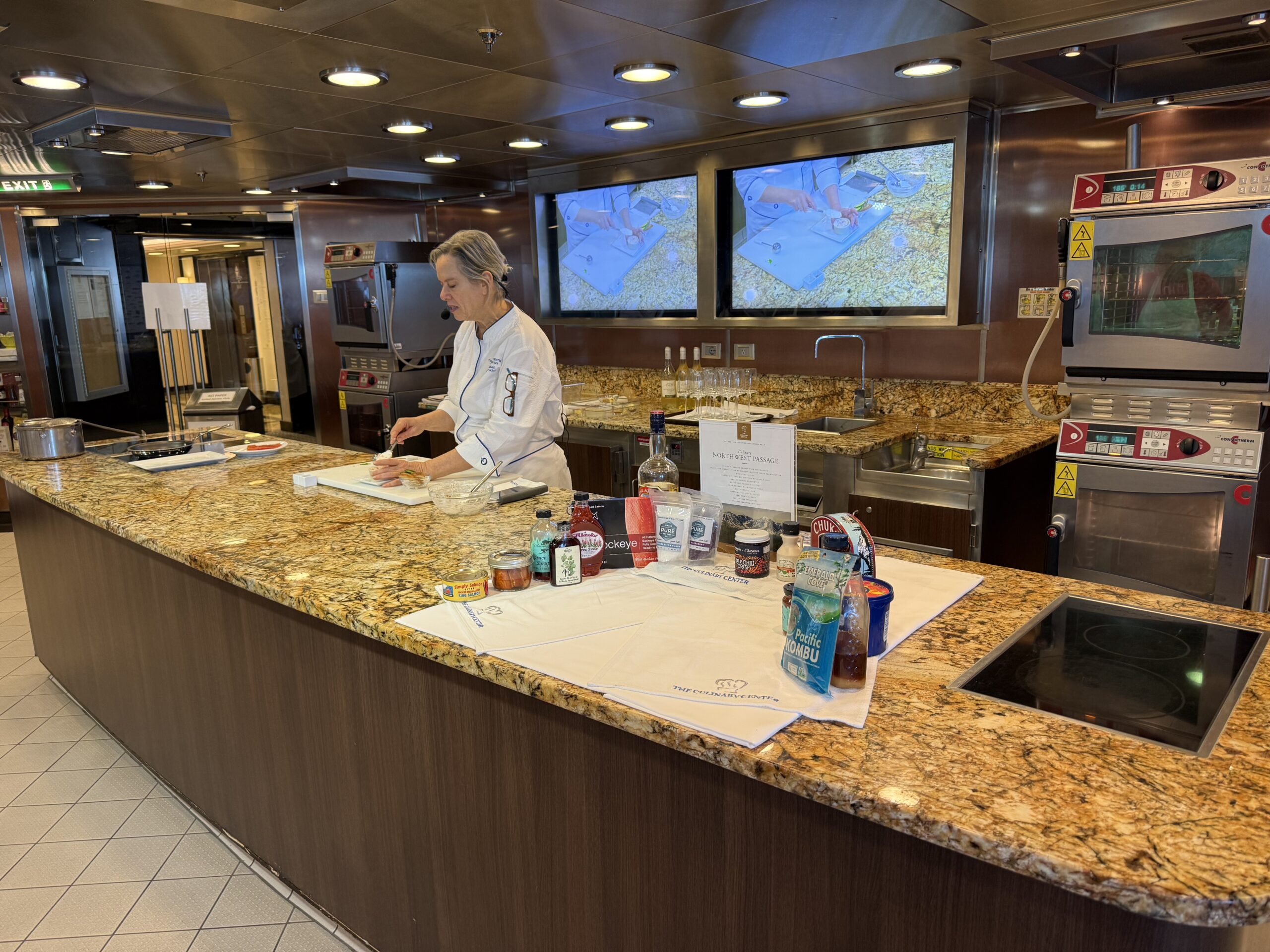
This class was all about Pacific Northwest cooking, and we prepared a delicious salmon. They called it a rillettes, but it was really more like a sort of pâté or dip. It incorporated poached, smoked, and gravlax-style salmon, and she demonstrated how each of those was prepared, although our only task was to mix them into the base that formed the buttery part of the dish.
Second, we made a dessert that was essentially a berry compote with a pastry crust. We did the dessert second because it had to bake in the oven while we fixed our main course, which was seared scallops. We learned a lot about searing scallops in this lesson. The big takeaway is to do them in clarified butter and do 80% of the cooking with them untouched in the pan, just making sure that the butter stays around them, and then flip them briefly to finish. This creates a lovely crust on the presentation side and makes sure that the scallop is fairly evenly cooked all the way through.
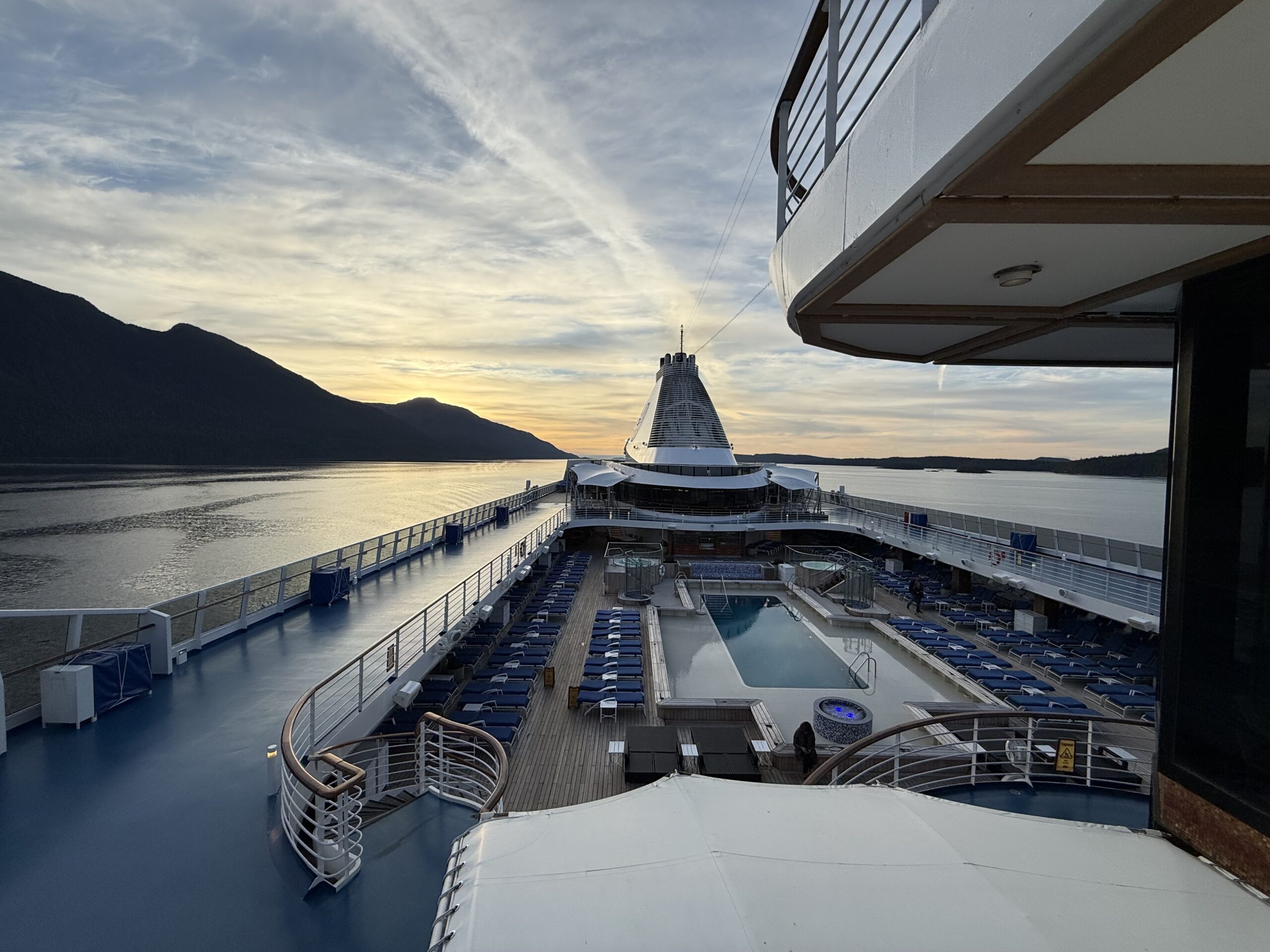
Friday night, I stashed the six one-liter bottles of liquor the cruise line had given us — as near as I can figure, $400 or $500 worth at Canadian prices. I’d planned ahead and brought leftover inflated wine bags, which handled it perfectly; I even had a weird oversized one that the Grand Marnier fit into. My suitcase was a tad heavy, but all I had to do was roll it.
He had cocktails in Horizons and watched the sunset and passed a very peculiar barge towed by a tugboat.
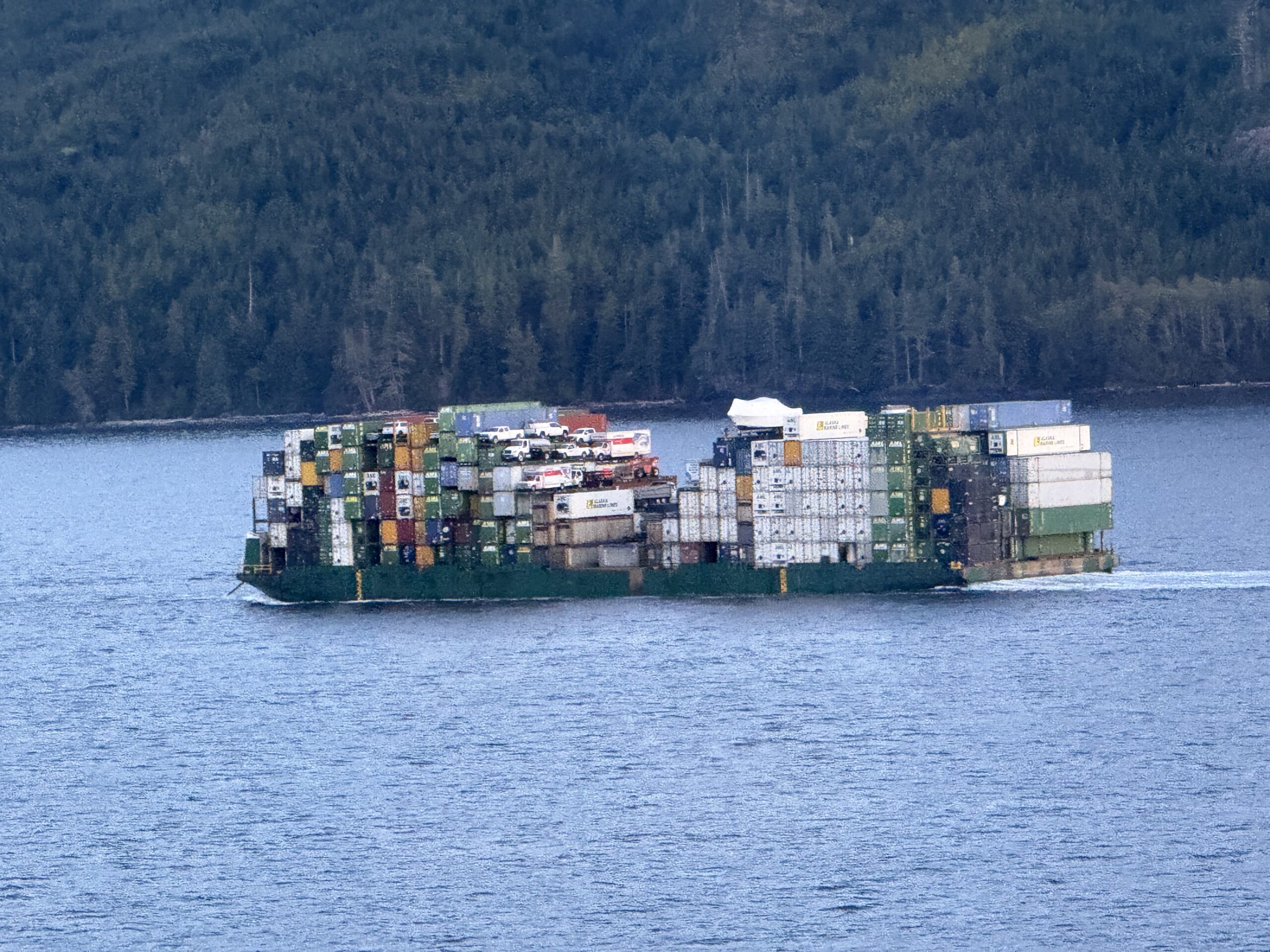
Apparently, after the summer season ends in Ketchikan, this is how you move your stuff back to Seattle.
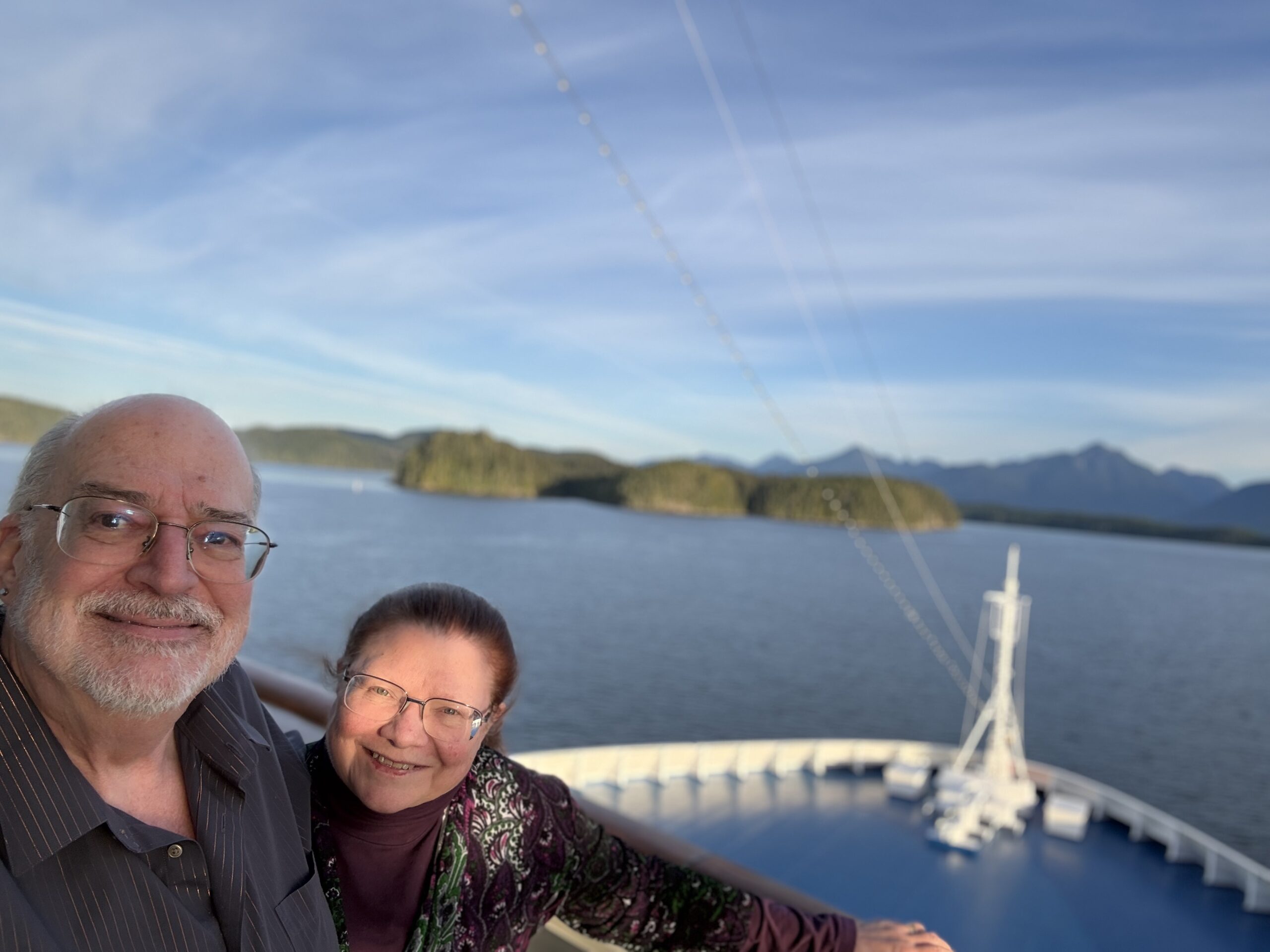
Saturday, September 19, 2026 — Vancouver (Disembark)
Saturday morning, we were up by 7:30, had breakfast in the dining room at 8, left the ship at 8:45, and were tossing clothes into our own washing machine by 9:15. I love coming into the port of Vancouver.
It was a great trip. Our takeaway: a beautiful cabin, but we wouldn’t want to be on the front of the ship again. That mirrors what we learned on a Princess cruise, when a cabin at the back of the ship proved surprisingly noisy from the wake. So for our next cruise — already booked — we’ve chosen an Oceania Suite, on the side of the ship near the front. It has a great floor plan, and it’s close to the size of this Vista Suite.
The other surprising takeaway: this was the first cabin we’ve ever had that was actually a little too big. The bathroom was a little too elongated, the exercise room was no use to us, and it turns out we don’t need a balcony the size of a bowling alley — especially one you can’t use while the ship is under way.
Our next cruise is back on this same ship, but in Japan. We’ll check out the Oceania Suite on that trip and keep you posted.
Writing about your own travels?
Steve teaches Travel Writing as part of Writing Academy lifelong access: how to find the story in a trip, structure a scene, and make the reader feel like they were there.
Explore Writing Academy